Belle Époque
2014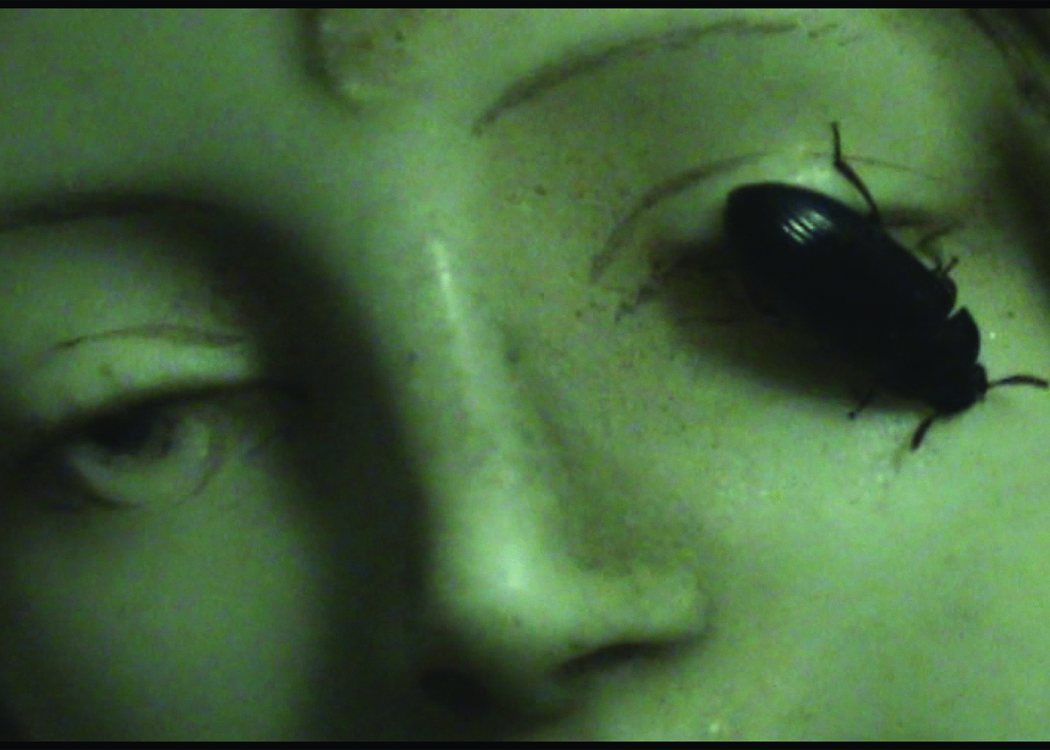
“I have been working with video in a more systematic way since 2007. The project Corpo toma Corpo pointed to a transit between the real and the imagined, between the conflicts and complexities of a city perceived as a big living organism, a vast body that contains numerous bodies within itself. Dilacerated bodies that lose themselves in the crowd, in time, in memorylessness; their organs superimposed, denied, or excluded, but always pulsating with life. Sexuality, the market, rawness, possible fables, desires and desperations. The video Belle Époque is certainly a development of these reflections, an unfolding whose primary focus is our love and hate relationship with the past, the golden days of the rubber boom in Pará. In it, the sense of falling, of precipice, structures these issues and renders them visible.
Such is Belém in its decline. The city experienced its economic peak at the dawn of the 20th century. The Rubber Boom bred a Paris N’America, built between the river and the forest. Flashes from 'the lights' amid the gambling and the caboclo hookers wearing bridal garlands and tobacco. What a Debacle-bankruptcy it was, and is! They tried to pacify the savages, the natural-born 'rage', in an effort to civilize. However, in our mouths, there’s still that old Tucuma seed! In the window of the house next door, a woman liquefies into sap, slime, lime, juice, nectar. She slips into her own emptiness. The blind Marialva still unravels dreams in the hammock. The moment the church bells rouse Belém from its slumber, my bellybutton is being buried behind the Cathedral. My bones and muscles are abandoned at the curve of Capoeira do Rei, my liver is left out for the vultures to feed on, my eyes on a silver platter. In grief, Porto Velho awaits for the Madeira River to turn to sea. Little does it matter to wipe the tears of the rubber tree plantations. Even if we walk through the limestone streets, we will never reach the past that comes apart.
I am very much interested in this conflicted relationship with this past. It is a troubled mix of pride and loss. Something resized and configured by the many generations that followed the fall of latex in the Amazon. While this issue occupies an important space in the Northern imagination, it is seldom verbalized. It appears, to a much greater extent, in the form of a certain 'veneer', as the poet João de Jesus de Paes Loureiro points out, a thin modernizing layer that goes back less than fifty years, opposing centuries of accumulation of those who arrived and came from the woods, the wild man, the 'uncultured' man. The cultured memory of Pará prides itself in the fact that Pereira Passos had dreamed of building in Rio de Janeiro what he had seen in Belém during the Belle Époque: its boulevards, its flâneurs and the bourgeois sweet life. He wanted the capital of the first Brazilian republic to have the same airs as Paris, its furtive mishaps, typical of a high-speed urbanity that tears the city in half, broadening lanes and 'sanitizing' huts.
Until this day, in their 'tailless donkey' carts, produce peddlers silently defy the Europeanizing 'civilizatory' ideals of the streets of Belém. The iron architecture eaten away by time and skins copper-toned due to the sun. Belém smells and stinks, it’s an eviscerated city. No wonder the Ver-o-Peso market is more than just a silly landmark. It evokes what’s deepest about the city: it’s falling, it’s vertigo from the breaking of frail, alien paradigms. Hybridism and a non-place are demanded, and this place responds with diverse speeches from many islands.”
Armando Queiroz in a statement to PLATFORM:VB (July 2015)
Belle Époque, 2014. From the series Extremo Norte | Vídeo, 1’
Armando Queiroz
João de Jesus Paes Loureiro | Conference Amazônias: paisagens, narrativas, sentidos | Part 1
The writer, poet and professor at the conference Amazônias: paisagens, narrativas, sentidos, held in Belém (2010). [pt]
João de Jesus Paes Loureiro | Conference Amazônias: paisagens, narrativas, sentidos | Part 2