Beit El Baher (The Beach House)
2016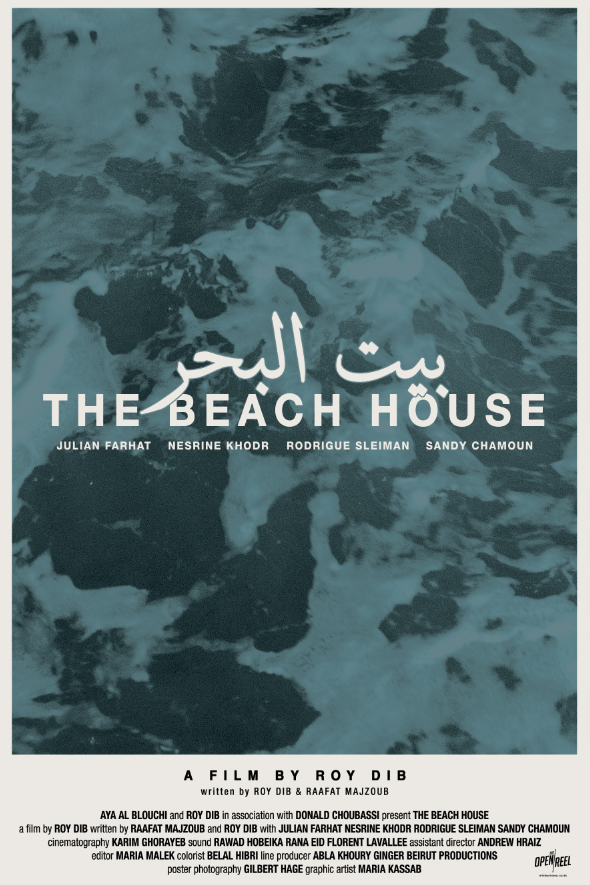
My short film, Mondial 2010 (Teddy Award for Best Film 2014, Berlin) is a travel film following a Lebanese gay couple on a road trip to Ramallah that is impossible in real life due to Lebanon and Israel being enemy states. This loose “huis clos” format of a couple enclosed within a vehicle, enclosed within a disappearing city, allowed me to explore a very intense relationship between the characters because of the generated claustrophobia. In A Spectacle of Privacy, I adapted this “huis clos” into an installation, in which the audience is invited into the couple’s bedroom as intruders of this candid, private space. The audience members become physically trapped within a narrative that forces them to rethink their positions towards the content. And in The Beach House I explore this context of “huis clos” in the cinema field.
I found myself getting more intrigued with the “huis clos” template explored internationally in films such as Buñuel’s The Discreet Charm of the Bourgeoisie and Antonioni’s The Night, as well as locally in Ghassan Salhab’s The Mountain and Djamila Sahraoui’s Yema. I felt that this structure of enclosure is a very sincere dramatic representation of the state of the Arab world today. Even though there has been a vivid increase in local production, few Lebanese or Arab films experiment with dramatic structures to fit their contexts. Dialogue too is still very classical in most local productions.
With this project, I strived to explore individual mannerisms, group interactions, acting and cinematic style to create cinema in context. The Beach House did not conform to existing production norms of making cinema in the Arab world. Unlike scripted, safe productions where the final product could be foreseen from the beginning, The Beach House’s plot and dialogue were improvised with actors freely playing their narrowly defined characters. This character-building process dominated the pre-production phase of the film, where the actors learned their characters as opposed to learning their scripts, in the presence of the DOP (director of photography) and the sound engineer, both participating in the production of the feel of the image, the sound and familiarity with the actors.
During this process I was working along with Raafat Majzoub, the co-director of the film. After one month and a half of improvisation workshops with the actors based on contexts Raafat and I were proposing to the actors, we had our own one-month period alone to write the final scenario from within the material gathered from the improvisation and our own input and vision.
The production phase, as well as shooting the film, was a sort of experimentation. With the DOP Karim Ghorayeb, I spent hours on location discussing the mood and the cinematographic choices of every scene without writing anything down. During the shooting, we decided to film the scenes chronologically, as you see it now in the final result, leaving space for the DOP to take his artistic choices to the set, and based on our discussions. The final decisions were taken every moment on set, in discussions with the DOP and Raafat Majzoub, the film’s co-director.
One of the most important aspects of The Beach House is that it was not scripted from the beginning. While seeking an alternative representation of the “Arab image,” we are not trying to dictate what this image is. The writing process incorporates the stakeholders, including cast, crew and setting quite religiously. It is through this constant brainstorming, this participatory approach to tell a story that this film gains its vantage point. Creating this new “Arab image” based on an improvisation technique is not merely an artistic choice, but rather a very political one. We are not interested in dictating this image. We are proposing that this step forward in the Arab cultural production should come out of participation and co-imagination.
The Beach House tells the story of four characters, an ensemble with no lead, having dinner at a beach house. At the core of the dynamics, the characters, through conversations at the table, invite each other to destroy each others’ personas, to disrupt their public performances to eventually reach a truth they do not know what to do with. The film’s tempo accelerates with their adrenaline, as they get addicted to the demolitions of their own images. Through improvisation, the same relationship exists between the characters and us as they demolish any projected image we have of the narrative. Romantically speaking, the film could be considered one that is about the masks we put on and our eternal journey to find people that will see through them. Socially, it is a comparison between public performance and personal revelation. Politically, the portrayal of truth as catastrophe, and image/representation as post-catastrophe.
Roy Dib in a statement to PLATFORM:VB (August 2017)
Beit El Baher, 2016 | Video, 75'
Roy Dib
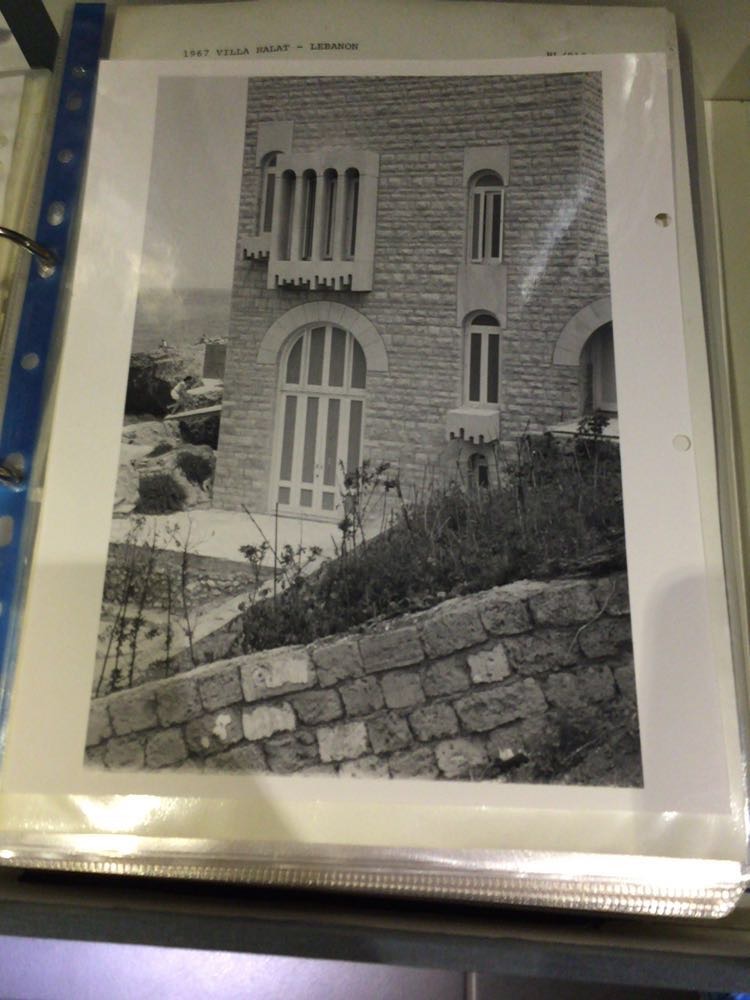
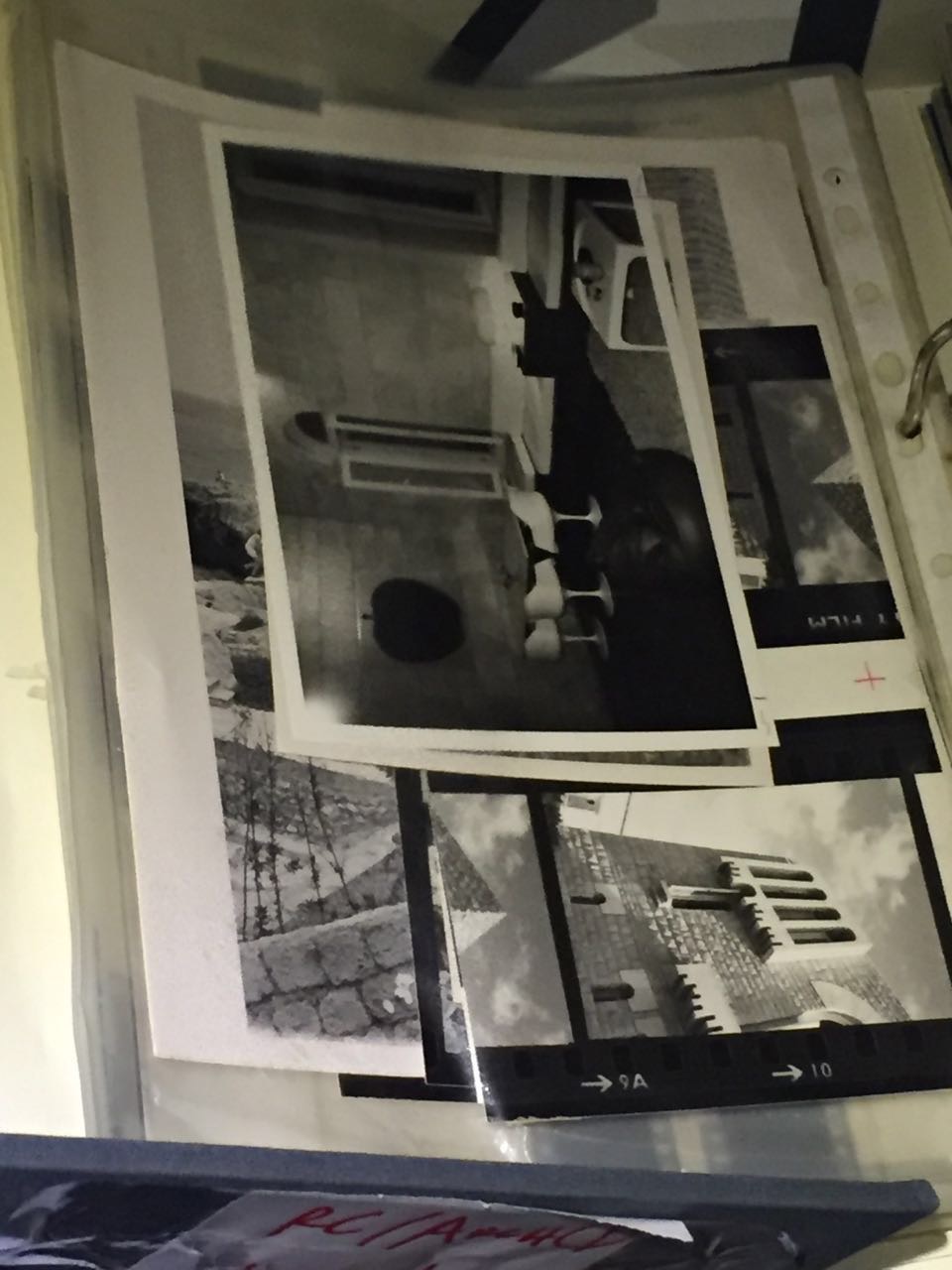
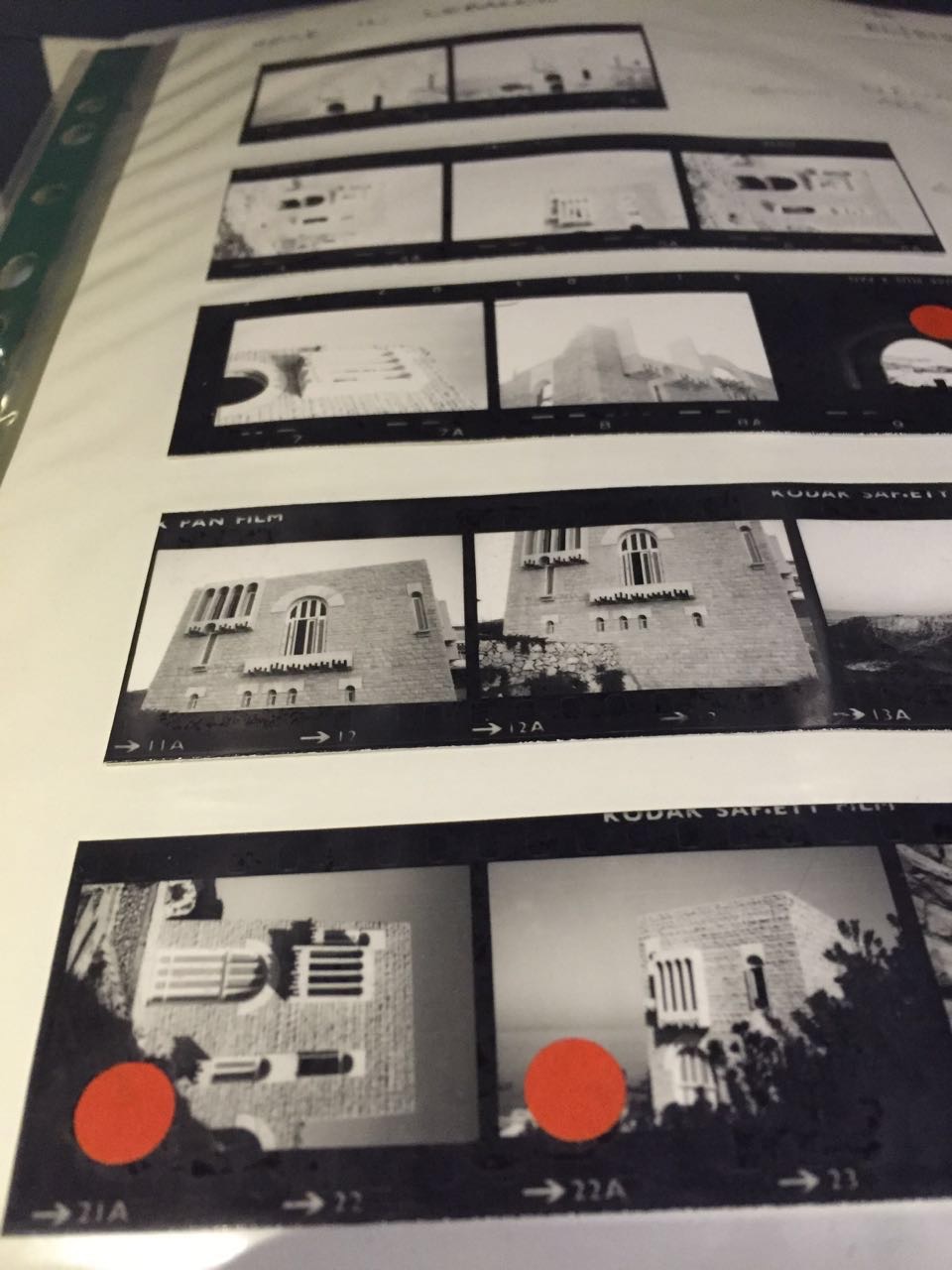
The film was shot in a beach house designed and built by the Iraqi architect Rifaat Chadirji in Halet, a village north of Lebanon. “Rifat Chadirji was born on December 6, 1926 in Baghdad. He is considered to be one of the major 20th century Iraqi architects. Chadirji has imbued his work with a deep understanding of the roots of authentic regional expression, as well as a true appreciation of modernism and its principles. Chadirji has shown a unique capacity for the synthesis of form and function that translates traditional architectural idioms into contemporary expressions.”
I believe that Mr. Chadirji’s essential experiments in merging the modern and the traditional, and experimenting with the effects of new techniques on the latter remain relevant to this day. Today’s production of space seems to have jumped over what Mr. Chadirji was trying to resolve. His icons have been damaged or demolished instead of studied, and I see this as an opportunity to explore one of these remaining icons in cinema. I believe that the vivacity of an icon comes from its use as a tool—not just as a reminder—and by exploring Mr. Chadirji’s beach house in this project, I hope to pay tribute to an architect that refused to simply adopt forms of the past and set out to create a language for his time.
About the paintings and sculptures
The house, in the context of the film, is inherited by the two sisters from their father. We don’t see the father in the film, but from the elements of the house and the way the girls talks about him, we learn he was an intellectual who loved art and was very close to some of the artists and intellectuals of his generation that used to visit him in the house. The paintings on the wall and the sculptures are said to be part of the father’s collection. They are the remaining traces of him, and the witnesses of the history of this house.
Paintings courtesy of Abraham Karabajakian and Roger Akoury
Blue sun (1990) Helen Khal
Baroque (1970) Shafic Abboud
Instantanée (1970) Shafic Abboud
Appolo (1976) Saliba Douaihy
Untitled (1976) Saliba Douaihy
Landscape (1983–1984) Etel Adnan
Photograph courtesy of Tanit Gallery, Beirut – Naila Kettaneh-Kunigk
Sherihane (1987) Fouad Elkoury
Sculptures courtesy of Agial Gallery, Beirut – Saleh Barakat
Brass, from the Dual series (1985–1987) Saloua Raouda Choucair
Brass, from the Module series (1978–1980) Saloua Raouda Choucair
Resin (1971) Michel Basbous
Travertino persiano rosso (1976) Alfred Basbous