Barrueco
2004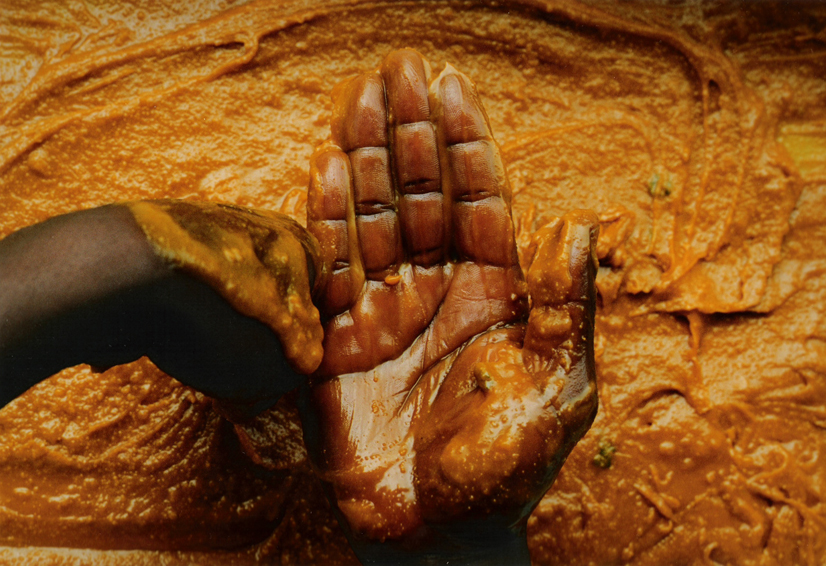
Video still
Video still
Video still
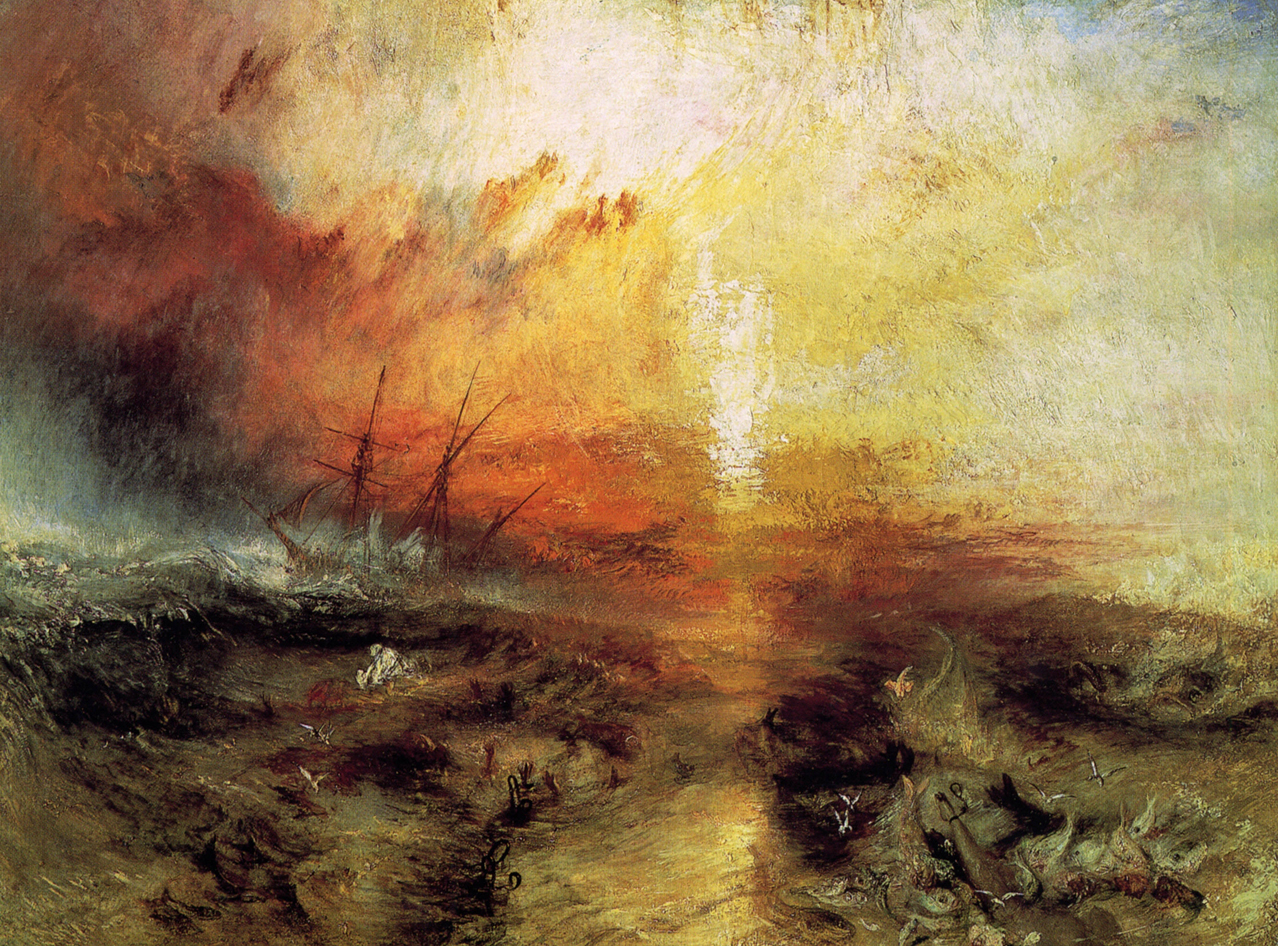
William Turner's Slave Ship.
“The video Barrueco originated from the research for my master’s thesis which I defended in 1998, Segredos no Boca do Inferno – arte, história e cultura baiana (Secrets at Boca do Inferno – art, history and culture in Bahia), a historical, anthropological and sociological investigation of Bahia. It wove a tapestry of sorts, covering the era of colonization and sugarcane farming, the slavery phenomenon and its contemporary reverberations in Salvador and Bahia throughout the 90s, as the affirmative black culture movement emerged, and citizenship took center stage.
In my research, I started working with emblematic materials if one was to think about Bahia’s cultural body, which is in a way composed by the mark of the ‘holocaust’ of slavery: sugar, beef and palm oil. Throughout the 2000s, I delved deeper into these materials and developed the strategies and tactics to affirm black citizenship and reflect about black belonging when it came to building Brazilian citizenship.
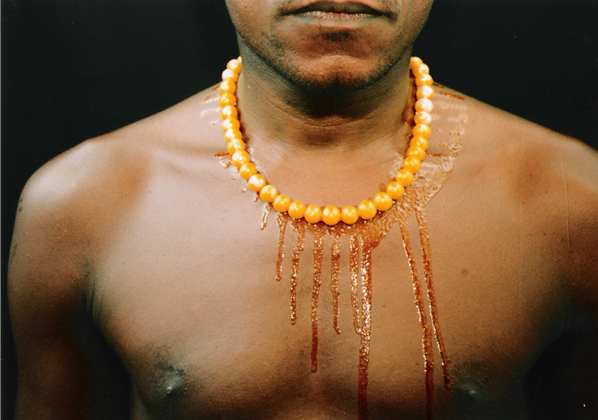
The word barrueco (baroque) refers to imperfect pearls. I was interested in the idea of an impure, non-classical beauty. The complex, miscegenated Brazilian cultural phenomenon and more specifically the dynamics established as Africans came to Brazil. The video is part of a series of works that restage our slaver past. It is a dive into the solitude that this has caused, the forgetfulness, the denial of a memory, and at the same time it is a dive into the rebirth of another American culture, a culture of diaspora.
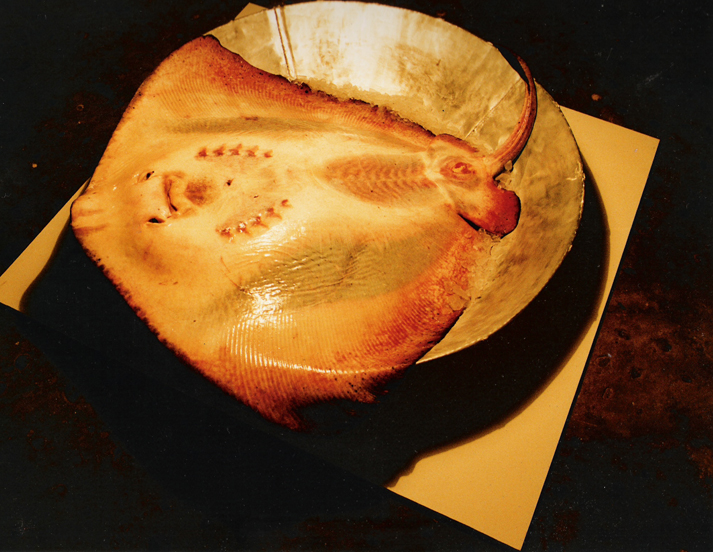
Barrueco features signs that are somehow part of the visual grammar I was building in my work. It opens with the image of the ocean and then a pearl necklace on this black torso where the pearls bleed palm oil. Palm oil is the blood, the semen and the saliva; it is the blood of plants, which often replaces animal blood in Candomblé rites. Turner’s The Slave Ship, a painting I have quoted in other works of mine. You also have the ray, which is an allegory of an Atlantic condor – the condor, sung by Castro Alves as a sign of freedom, for me is a ray in the Black Atlantic. The video closes with a religious iconography of Orishas, which I created through the movement of the hands and then revisited in another piece, As mãos do Epô.
The poem by Mira Albuquerque that is featured in the video makes mention of a slave, Esperança de Boaventura, and is based upon an official document in which, following abolition, Esperança is questioned where she is from. She recreates all of Africa here in Bahia, because in fact she could not pinpoint the whereabouts of her place of origin. The poem addresses the phenomenon of reinvention of a memory that has been lost, amputated, and discusses what it means to build this being in the wake of abolition. Her own name and those of others – the Aleluias, the Espírito Santos – did not come from ancestors, it did not originate from African families, and it shows the extent to which the past has been zeroed, and the violence and perversity of that period.
When the system legitimated a significant portion of black production in Brazilian art, it did so depreciatively, attributing to it the space of an art created by a population devoid of financial means, and hence reduced to the condition of being folkloric and popular. Yet these productions have always existed in a powerful, restless form. Lina Bo Bardi, for one, believed that the path to a Brazilian cultural project had to begin precisely with these productions, because they contain all of the inventions, arrangements, and solutions adopted in order to exist in Brazil. However, the Brazilian art system is still very prejudiced, and fails to understand that these productions are revolutionary, dynamic, and somehow constitute what we call contemporary today.
Right now, I am really focusing on analyzing projects that shun the hegemonic narrative of modernism. Everything we have learned about modern art in Brazil uses references from São Paulo, and a way of thinking built upon those references. Therefore, I think this must be deconstructed, and that we must highlight other ways of thinking about the relationship with modernity, future, the idea of progress for Brazil, ways of thinking along paths, different cultural projects.”
Ayrson Heráclito in a statement to PLATFORM:VB (August 2014)
Barrueco (2004) | Ayrson Heráclito and Danillo Barata
Video | 4'30"
Barrueco (2004)
Testimony Ayrson Heráclito | Unerasable Memories, 2014
The Bahian Ayrson Heráclito comments on Barrueco, which he created in 2004 in partnership with Danillo Barata
TESTIMONY Ayrson Heráclito | 16th Festival
AYRSON HERÁCLITO | Discussing the archive | 22nd Biennial
Ayrson comments on aspects of the works he has shown in Videobrasil editions, such as the combination of the meanings of performance and healing ritual, and the idea of historical reparation.
"During my research I was heavily influenced by Paul Gilroy’s thinking, to whom the Atlantic Ocean is the womb that spawns a black racial category through slave trafficking."
"Gregório de Matos is a key reference, as is Stuart Schwartz, who was instrumental in clarifying a few questions about Colonial Brazil."
"Currently, Achille Mbembe, a Cameroonian intellectual, is a landmark to me when it comes to thinking about necropolitical relations in a postcolonial context."
"I had a lot of contact with the work and thinking of Joseph Beuys, an artist who paved the way for me to grapple with the universe that is the moral history of humanity."
"I feel part of a tradition of tackling cultural issues very explicitly in art, like Tunga and the travelling painters that came to Brazil."
"I also feel very comfortable alongside artists who ponder on the Afro-Brazilian contemporary, like Aguinaldo dos Santos and other popular artists, like Louco, who I think promoted an amazing miscegenation based on a Rastafari tradition that came from the Caribbean, and created the idea of trance and psychedelia that influenced our early experimentalists, Glauber Rocha, Dicinho and Ednísio."