As Pérolas, como te escrevi
2011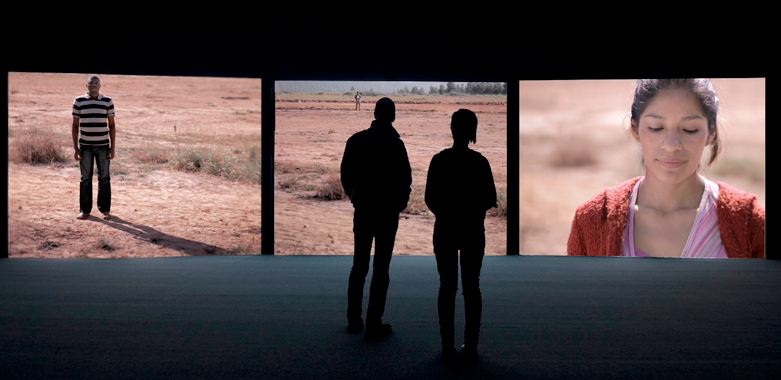
Image from the video installation As Pérolas, como te escrevi (2011), performed by Regina Parra on the occasion of the 1st Ateliê Aberto Prize, and displayed at the 17th International Festival of Contemporary Art SESC_Videobrasil.
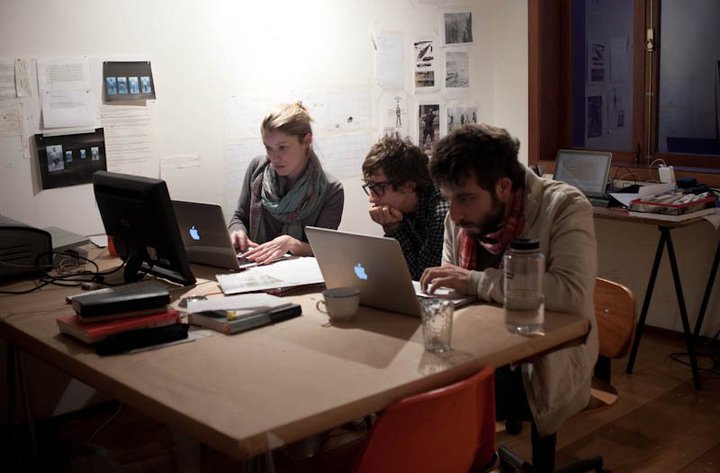
In residency.
I would like to begin our conversation thinking about the flows that your work rides. I am referring to the flows in the text Mundus Novus, by Amerigo Vespucci, which you have chosen to be read. The text is an account of Brazil, based on the views of an “explorer” who knew nothing about the country. You have appropriated this text, and proposed for a foreign to read it. That is yet another appropriation. And all these translation and appropriation cycles are part of the video. Or else we can call these cycles “inter-semiotic translation,” as Julio Plaza proposes.
Yes, that has everything to do with it. Haven’t I talked to you about translation?
No.
Because that is what the second chapter of my dissertation is about.
Have you used what Julio Plaza proposes?
Not exactly. I have used Benjamin’s The Task of the Translator. My work relates to the task of the translator and the idea of translation as a transformative and creative process. I really liked what you said, that you view the work as a process of translation, because, really, I think of this displacement of a text that is passed on from person to person and absorbing layers. I am going to discuss my dissertation, because it puts the work into context. May I?
Of course, we’ll think it through together.
The research is about Anri Sala, but ends up touching on other issues that interest me and converse with my artistic output. What I tried to research about Anri Sala was exactly how he works with situations where the coexistence between differences can be glimpsed at. The first chapter of my research is about the resistance of the work (either artwork or literary work) in the face of any attempt at analysis, i.e. how there is always a component that escapes analysis and the attempt at full interpretation, but this element, this node is what gives meaning to all the rest. And in the second chapter I try to outline how translation can be this place where the coexistence between differences is possible, but not a peacemaking or leveling coexistence, not a coexistence in which one nullifies the other. It’s a clash – and this is where what you said comes in –, translation as a possibility of creation. And what Benjamin says – and it also relates to this piece of work – is that translation is always a transformative process which involves relinquishment; it involves loss, but it also involves creation.
I think it’s great that we have converged to one single point, from different authors.
Yes. And what is best about these thoughts is that they admit that the text changes, that there are possibilities to create new, unexpected things. This has to do with the text I am working on in the video. There are other layers: some studies that claim Américo Vespúcio’s text was probably not even written by him. In other words, I took a text that is probably itself a translation modified by someone. Imagine how much it has been translated until it arrived at the version I have in hand. When I propose for the immigrant to read this text, I hope the reading is not neutral. We’re talking a lot about the work, about what this text is, what it is about, whom it was written by. I am trying to provoke them in order to learn their opinion, what they think of this text, what they think of Brazil.
Interview conducted by the researcher Galciani Neves with the artist Regina Parra during the residency program Ateliê Aberto #4, a partnership among SESC, Videobrasil and Casa Tomada.
[download the whole interview below]
As Pérolas, como te escrevi (2011)
Read the whole interview published at Convivências #4, launched on the occasion of the residency program Ateliê Aberto #4. [pt]
Study for As Pérolas, como te escrevi.
In residency.