Anphibology, translation
2016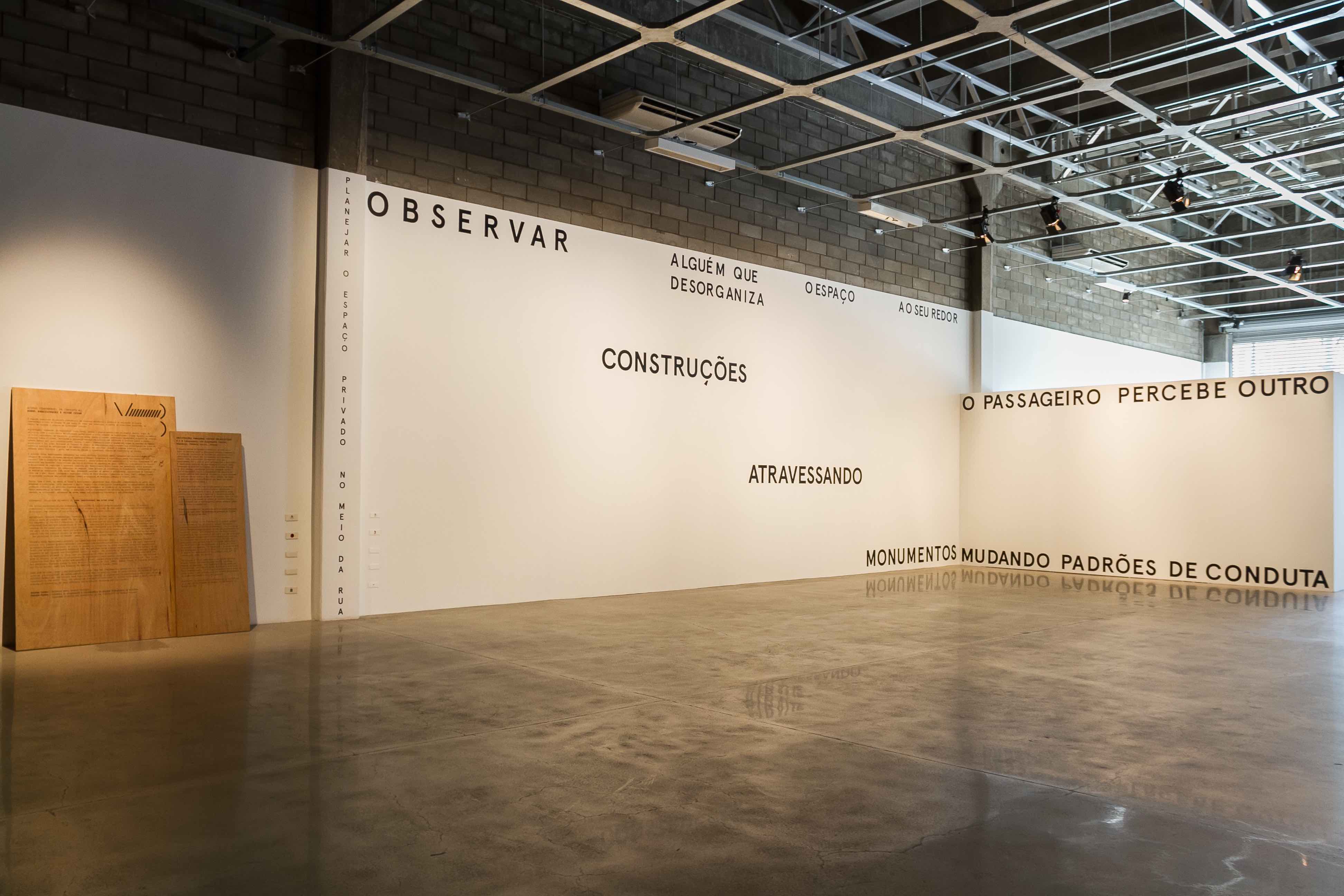
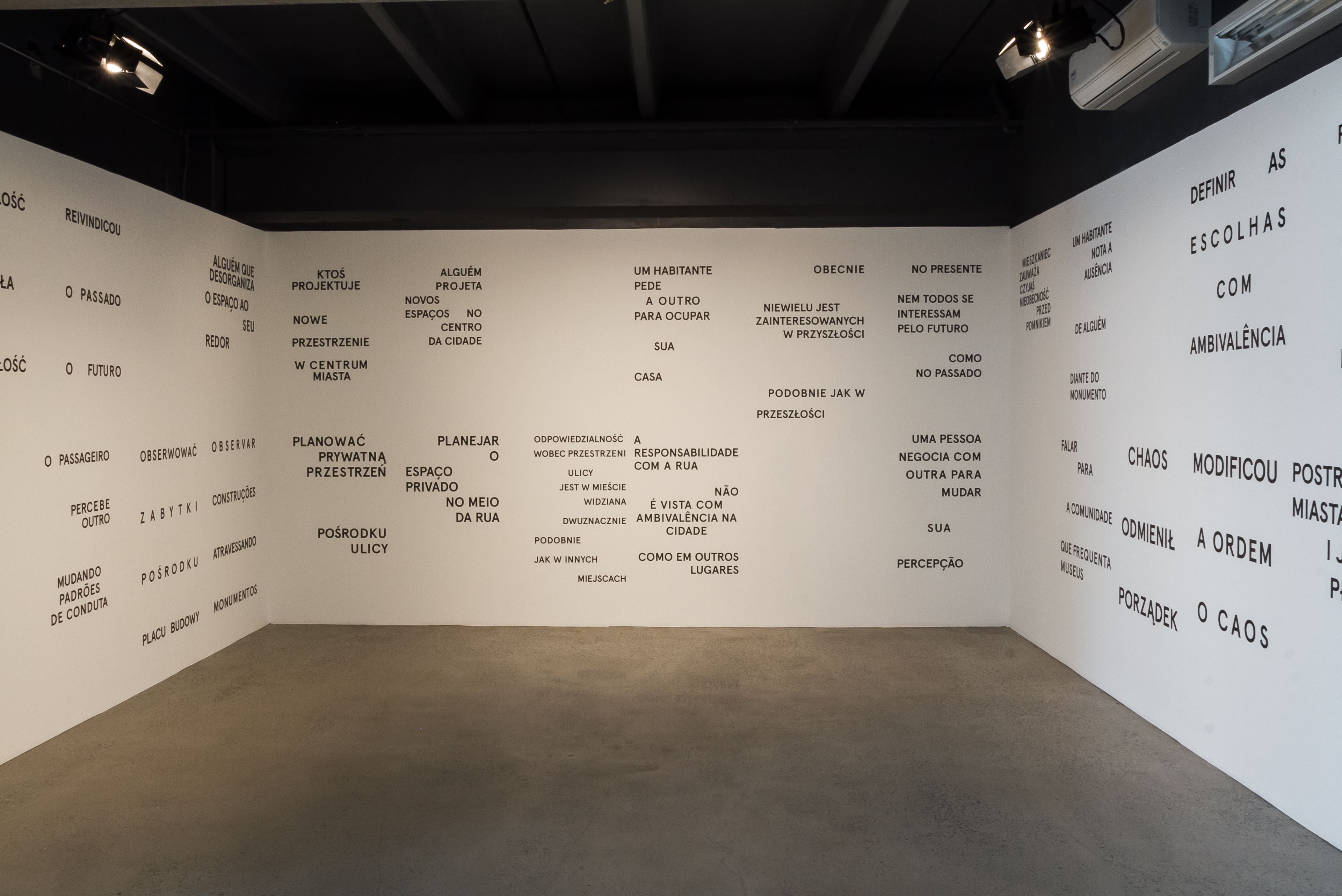
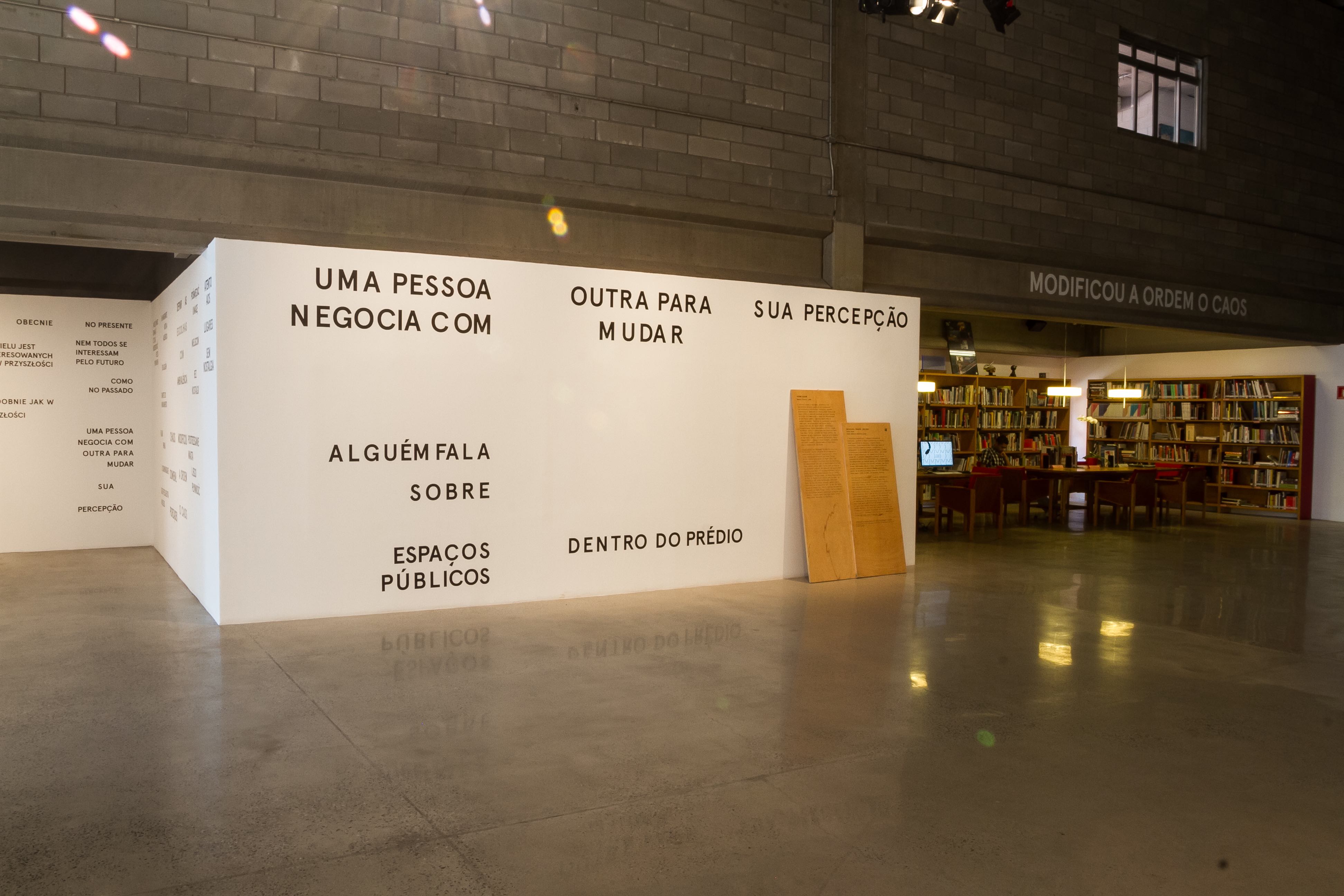
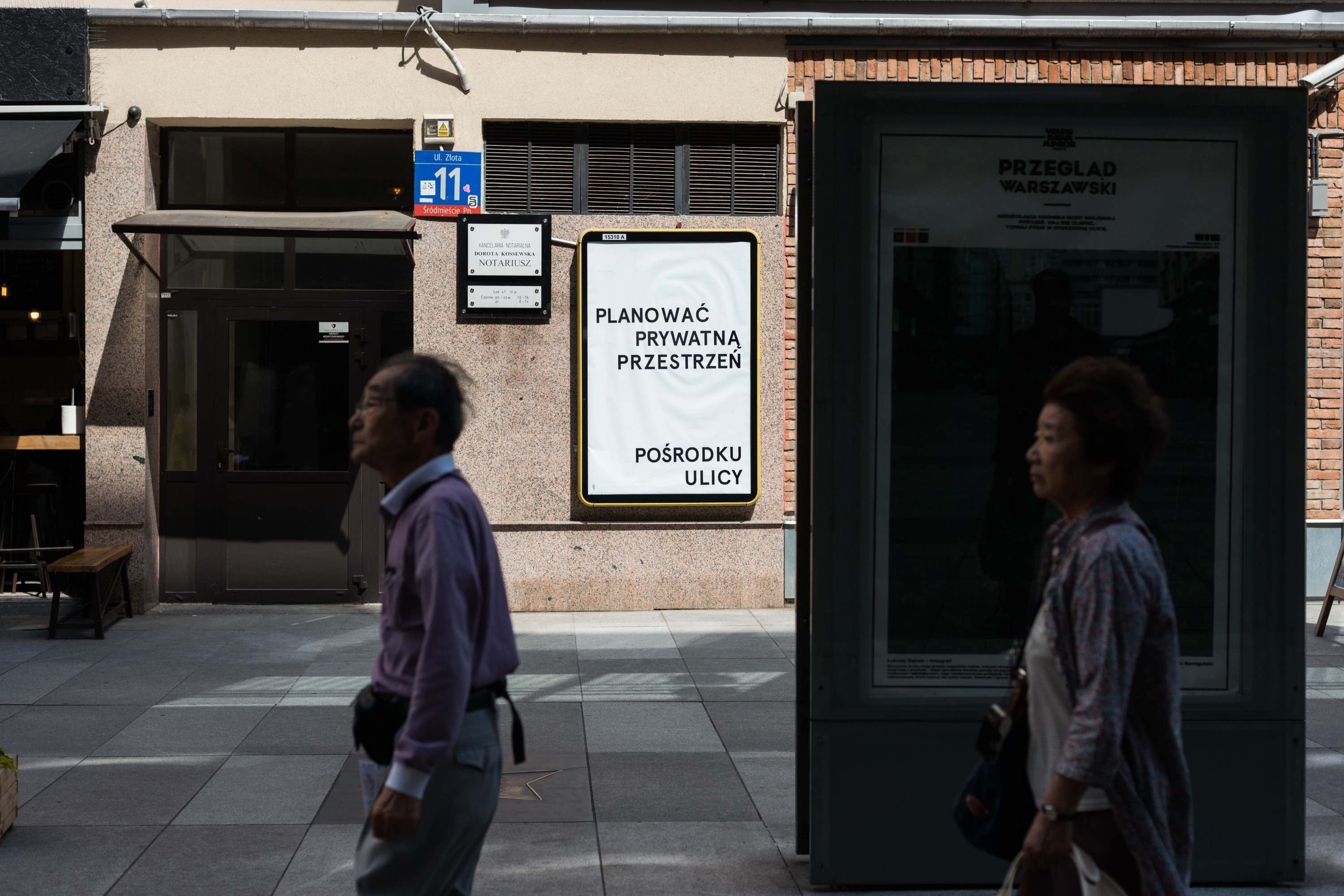
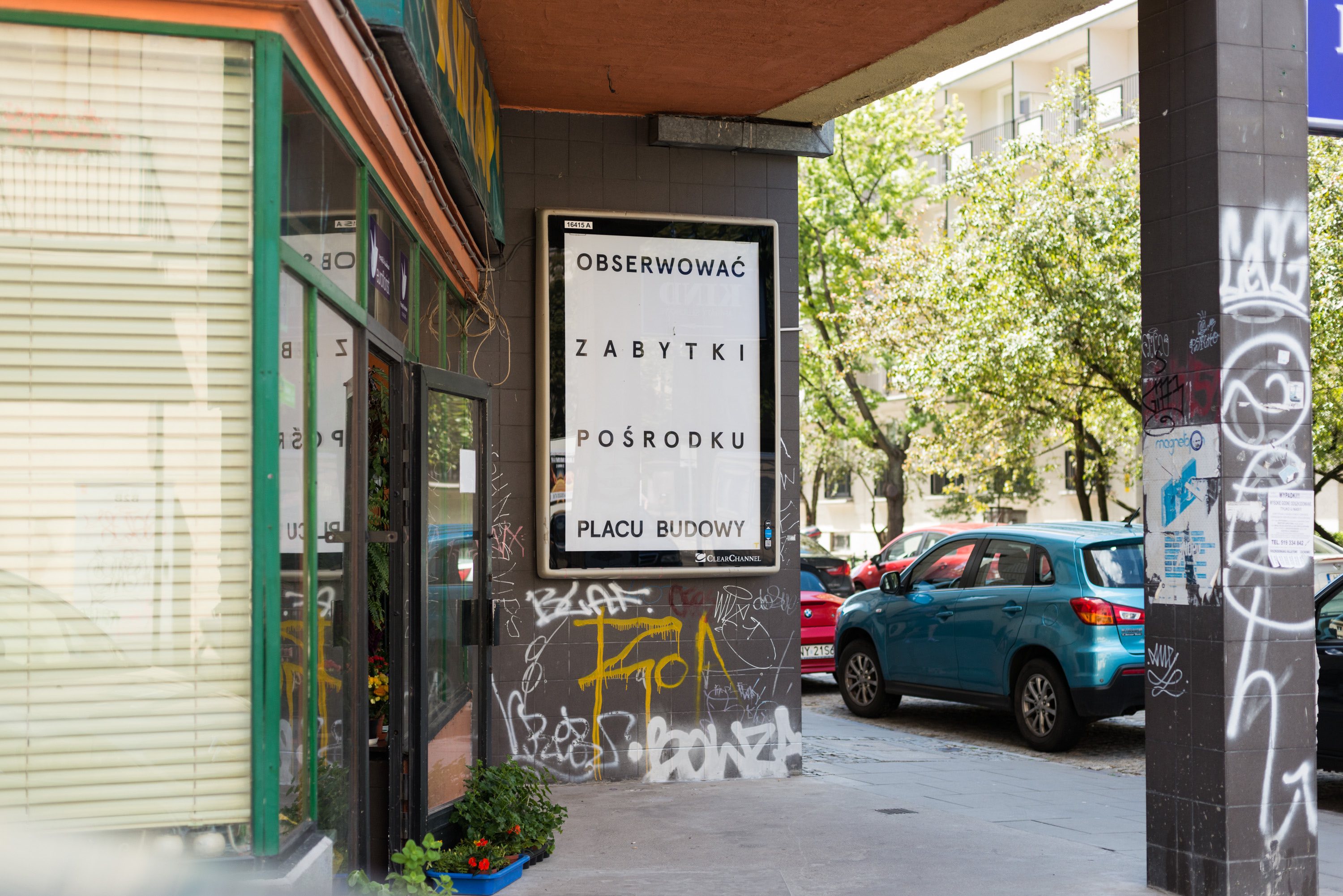
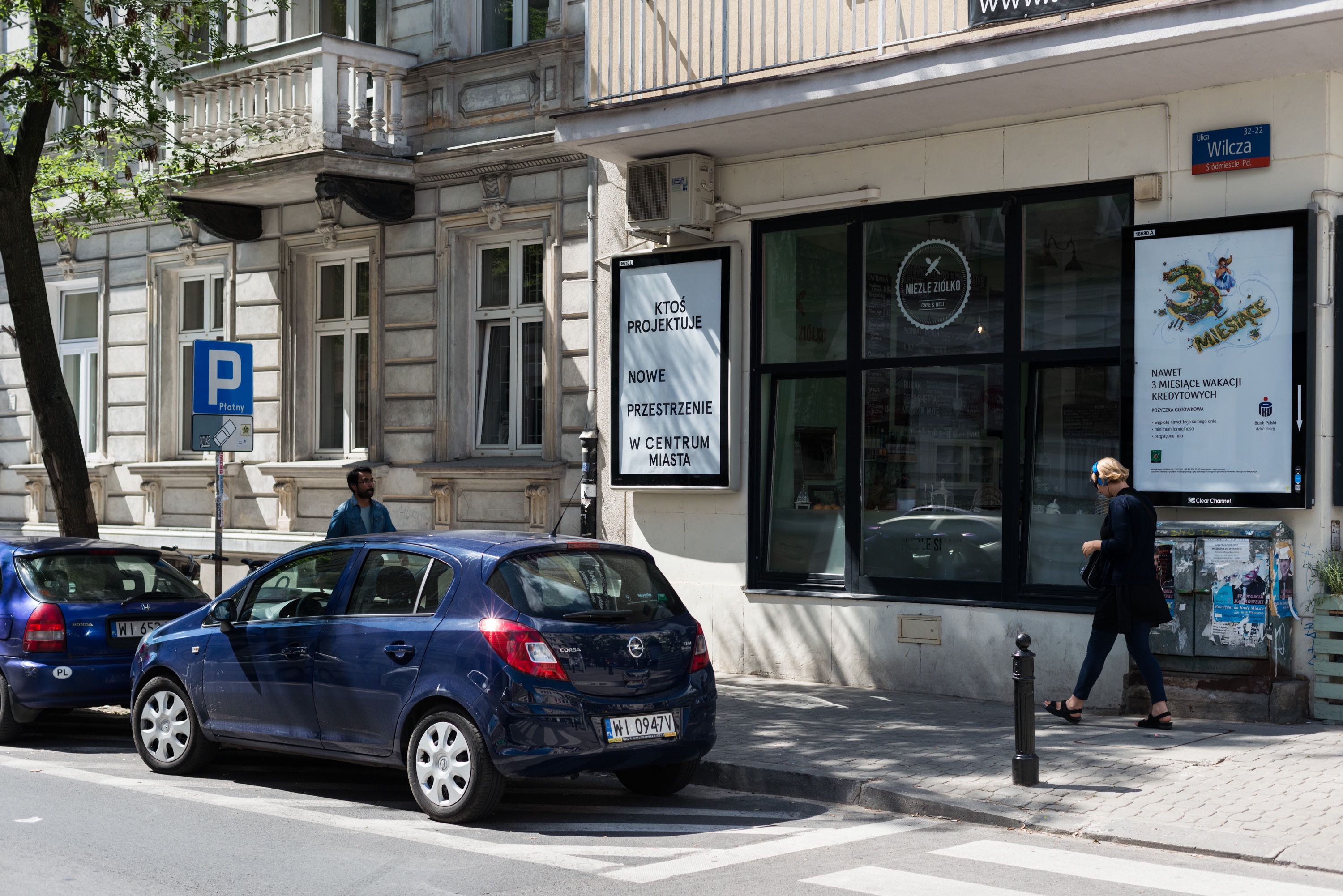
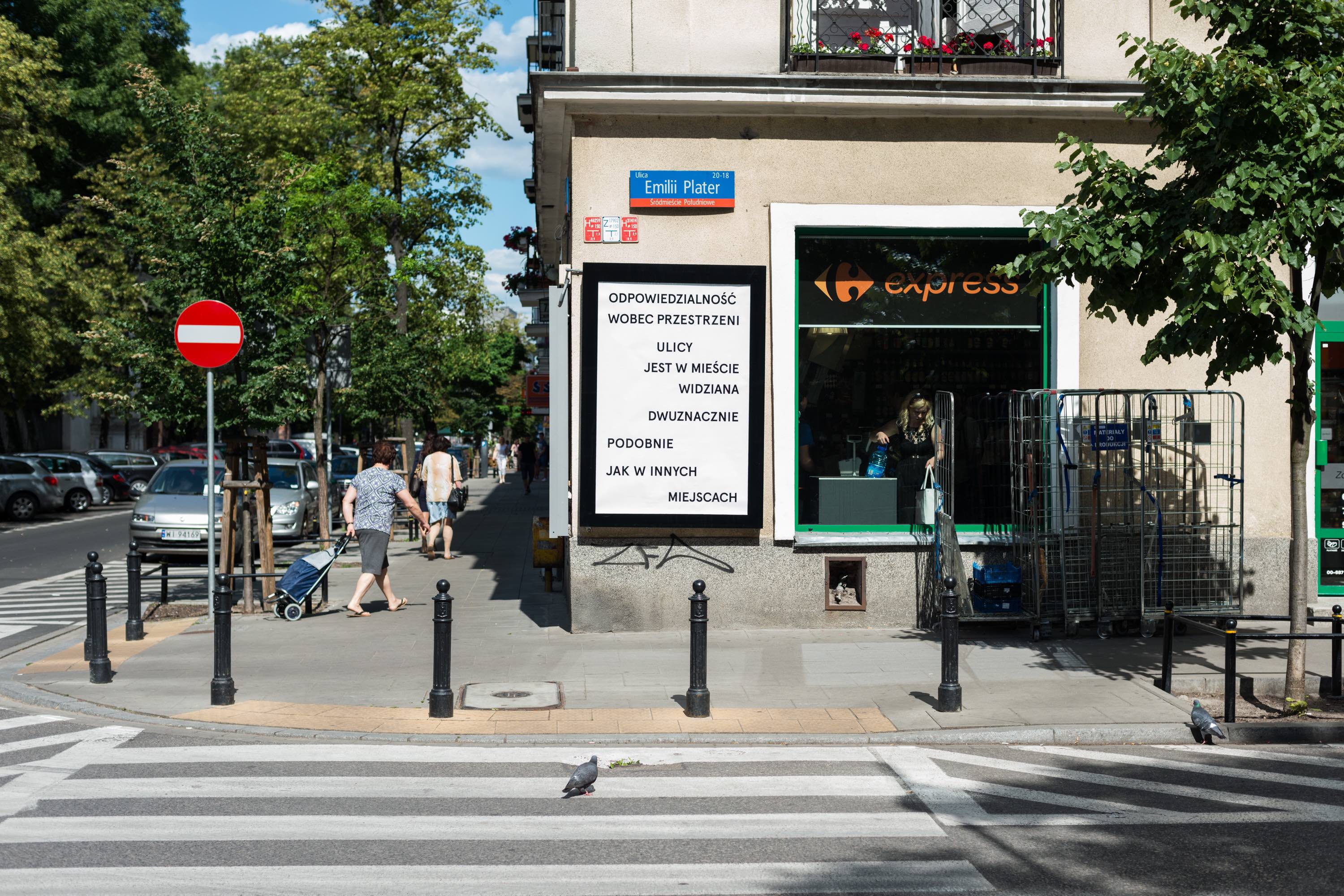
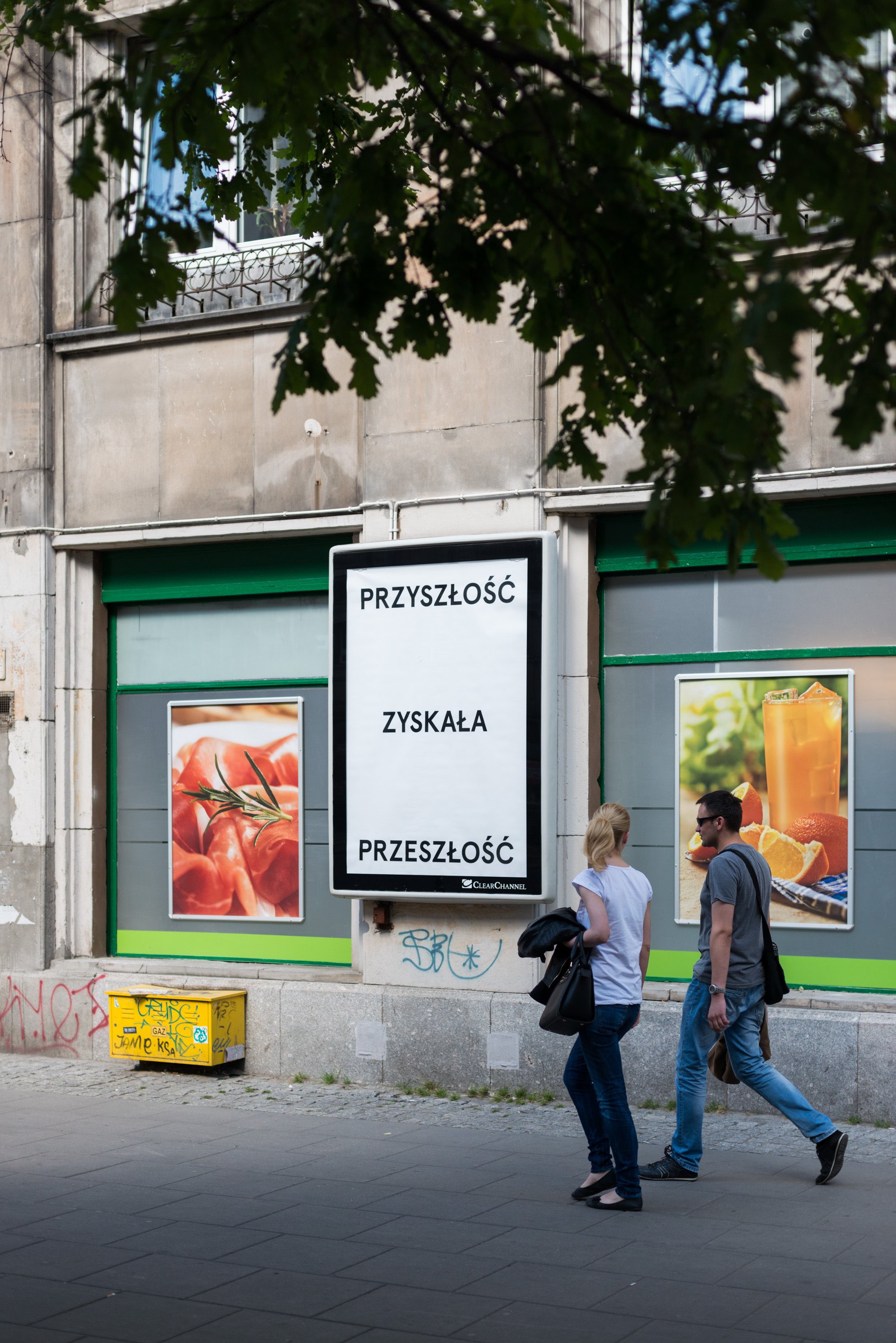
“The research began with a preliminary visit to Warsaw, about a month before the residency. When I arrived at the location, A-I-R Laboratory’s staff had prepared a schedule of walks throughout the city with architects, curators and other people who introduced Warsaw based on their experience and their perspectives. Naturally, this experience already awoke the research, even though I did not know what I would work with.
Meanwhile, between the preliminary visit and the residency, I did not elaborate a project. I awaited my return to Warsaw to keep thinking about what I would do in the beginning of the residency. The first month coincided with another program carried out by the A-I-R Laboratory, which gathered curators from different countries (Greece, Lebanon, India and Indonesia), and I had the opportunity to attend. The schedule was intense, with debates, visitations to museums and galleries, neighbourhoods that are far from downtown, and meetings with artists and activists. Back then, I was still receiving all this information without being focused on a problem to solve, a work. At that moment, I thought about recognizing myself under the condition of not knowing quite well what I was about to propose.
I avoided being oriented by a previous work, that is, I avoided trying to adapt something of mine to Warsaw’s context, giving in to automatisms. I was worried about at least minimizing my conditioned view in order to observe the city and actually be open to deal with a new context. Maybe due to certain resistance to the well-known idea of the artist as a foreigner — who supposedly bears a privileged perception. There is no such thing as a privileged or unprivileged perception; there are just different perceptions. A possible idea of advantage seems suppressive to me. And, in certain cases, in the artistic context, it can only be justified as a protected situation for the artist.
In spite of the short period of the residency, I decided to risk understanding what the very context could inform, what the passage through the city would bring me. As I did not have a pre-defined methodology, I was careful enough to organize the process. I accompanied all the visitations, took a lot of photographs, and by the end of each day, I tried to remember and take note of everything that stood out for me. At any free moment, I walked and observed the city. As time went by, I realized that, besides the city’s architecture and design, what drew my attention the most was the discourse and the accounts about the city presented by the people who oriented the visitations.
Upon acknowledging the impossibility of such a ‘privileged perspective’, I gathered it would be interesting to converge the different narrative perceptions of the city — those of the natives, as well as mine, as a foreigner. That interested me for it simply avoided narrating my way of perceiving the city, and, at the same time, it did not presuppose a neutral position on my behalf. I sought to deal with perceptions of others in a city where, somehow, I felt implicated.
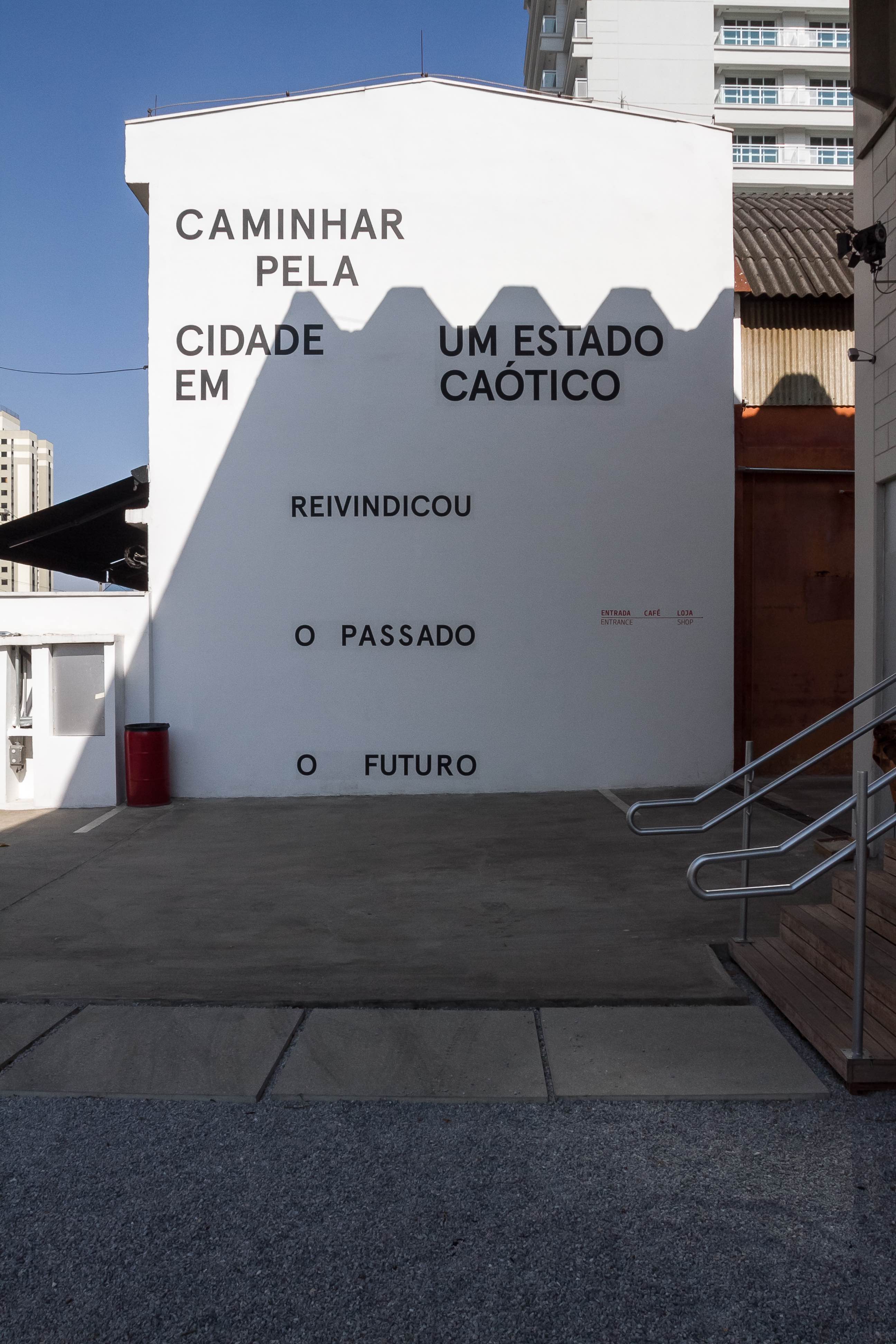
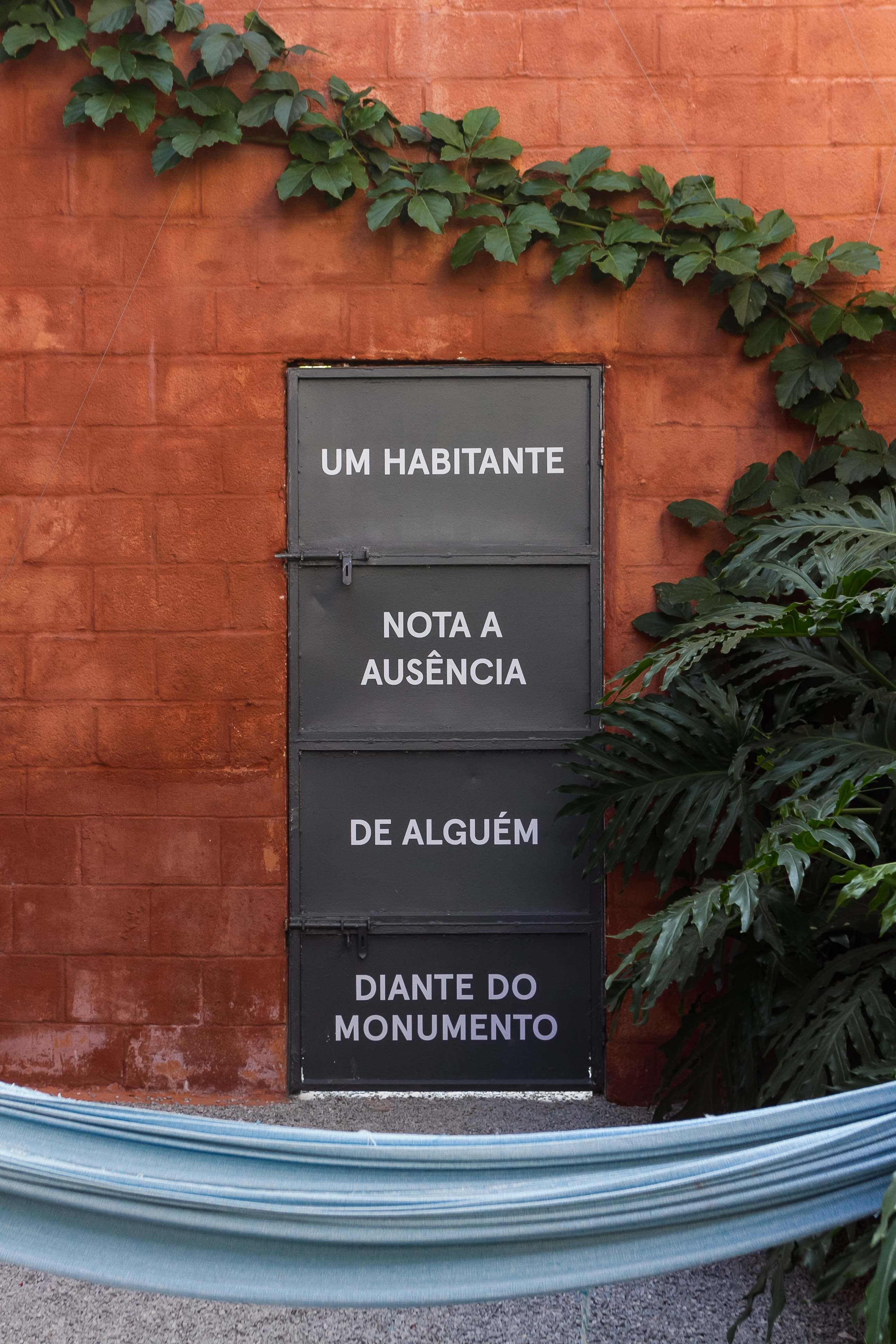
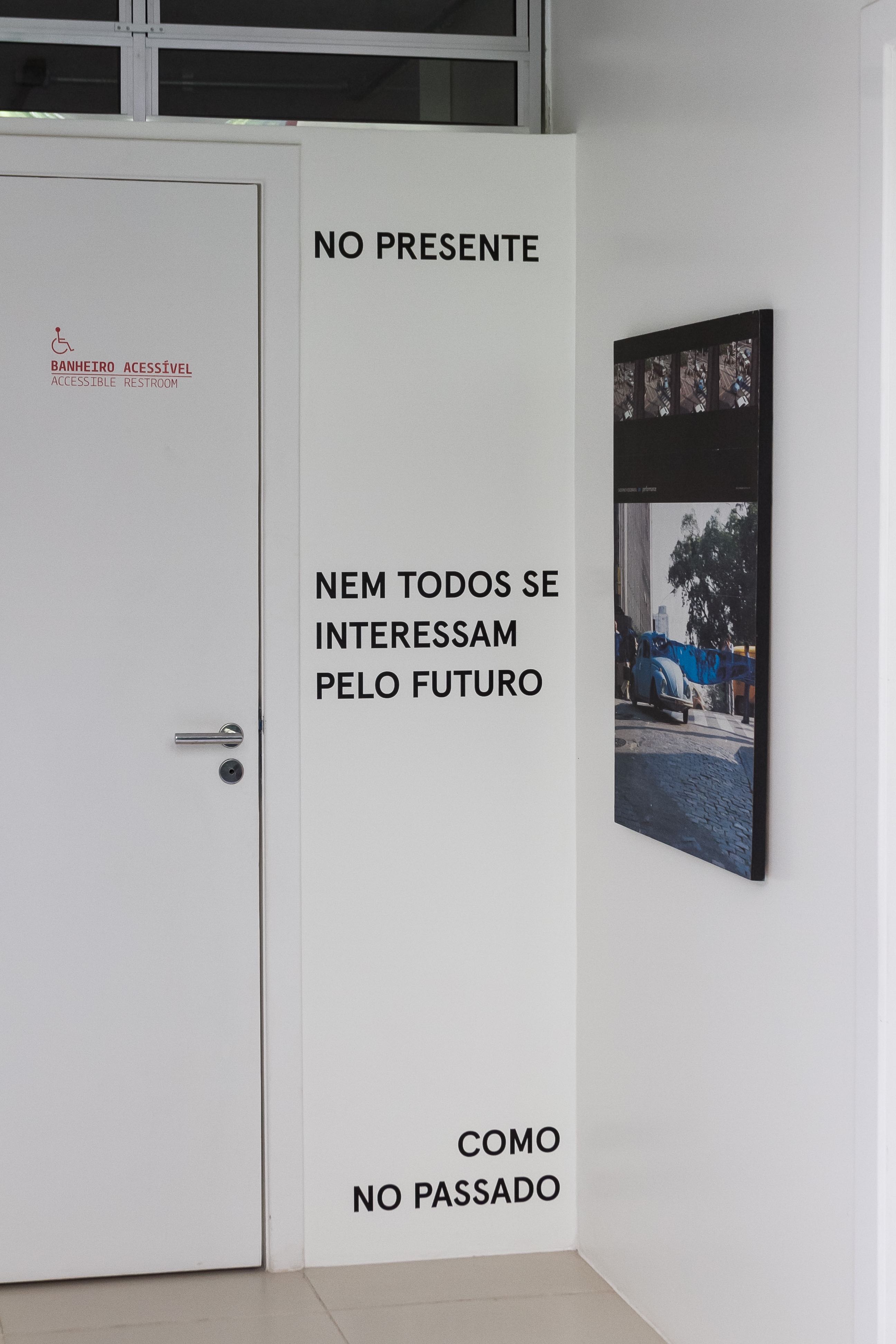
Using the accounts as material for my work, I started to develop ambiguous sentences. These sentences were formulated from a syntactic error that, in grammar, is called ‘amphibology’ — when the sentence allows for more than one meaning or interpretation. I had already worked with this element (amphibology), though in a different way, in the exhibit Anfibologia, reciprocidad, at Museo El Eco, in Mexico.
I do not write well. It is a task that demands a lot from me. However, I have come to realize that these sentences’ means of construction are not the same as when I try to write. I associate this operation with the thinking process of architecure. I separate words, collect exemples of amphibologic syntactic constructions, and I establish relationships among terms, like relationships among spaces, producing passages of double meaning with syntactic elements (like spatial elements).
It was curious to see how much information escaped from me due to the linguistic barriers. And it is evident that this total impossibility of the comprehension of the Polish language (and of a supposed native perception) determined my decision to work with text. And the language brought about a situation I consider really exciting: the trust in working with a translator. I do not have the means to check if the translation is correct — just like there is no way for me to check if the accounts about the city are ‘correct’, not in a sense that many people would agree about.
When I finally understood it would make sense to work with the amphibologic sentences, I had to find someone who could translate to Polish. So the residency’s staff suggested a conversation with a great translator: Michał Lipszyc. He was fundamental. A collaborator without whom the work would not be possible, for after I developed the sentences in Portuguese, many proved impossible as amphibology in Polish. In other words, we had to think together, modifying some of the sentences I had already elaborated in Potuguese, or even jointly building new sentences in Portuguese and Polish, simultaneously.
It is important to note that, during the period between the preliminary visit and the residency, I was invited by the residency’s curators to carry out a work that would take part in the museum’s art program and public space, and it would be exhibited in the period of the residency. The proposal established the use of 12 advertising pannels, which are set in several spots of the city — in terms of dimensions, they resemble the pannels at bus stops in São Paulo. Thus, another stage of the residency was to run across the city in order to check the available spots and pick them. The whole process was carried out along with Ika Sienkiewicz-Nowacka, the curator at the residency who invited me for the intervention.
In order to understand the way I think about amphibology, one needs to reflect about ambivalence, which, as a concept, made sense to me when I read the text Brasil Diarreia [Brazil Diarrhea], by Hélio Oiticica. In this text, the author says that acknowledging ambivalence is not about setting a position aside; it is about comprehending the complexity of things without thinking in absolut terms.
Obviously, the text was remarkable because, somehow, I recognized myself in what was written. He clarified something I was already exploring, but I did not know quite well what it was. I have experimented with different notions of ambivalence, such as, for instance, the understanding of something as a work of art or not. It seems important to me to explore the power of an indefinite place. We are used to categorizing the things we come about in our daily lives in a virtually automatic way. And I believe that facing the indefinite, or a problem of categorization, even for a few instants only, may provide the power to redesign an automatic means of perception on things. This is a matter of politics.
By the way, I always try to be aware of the political dimension of my work. There is a text, a conversation between Chantal Mouffe, philosopher who relfects about democracy and public spaces, and Rosalyn Deutsche, art critic attentive to the relations between art and the public sphere, in which the two authors oppose the term political art. This denomination pressuposes that there is apolitical art — and, for them, all art is political, for it contributes to the reproduction or deconstruction of a given common sense. I try to be attentive to that, and consequently aware that the form cannot be separated from the content. Since politics is frequently perceived as the topics of discussion in an institutional level, as in the congress or assemblies, it is urgent to retrieve other meanings from politics and recognize that it also happens in the small ordinary contracts: buying a newspaper just around the corner, being in a street, among others.”
Vitor Cesar in a statement to PLATFORM:VB (March 2016)
Anfibologia, tradução, 2016 | Site-specific installation
Vitor Cesar
“In an artistic proposition, I always respond to something. Rosalyn Deutsche talks about resonsibility as response-ability (the ability to respond). Eduardo Viveiros de Castro talks about responsibility as answering for your response. In this sense, I gather that the space of the artistic practice allows for types of freedom that enable experimentation with other relations and associations, so that one’s response is not only about reproducing what already exists, but producing other possibilities.”
“In the introduction of the book Pistas do método da cartografia [Clues about the cartographic method], authors Eduardo Passos, Virginia Kastrup and Liliana da Escóssia wrote about the ethimology of the word ‘methodology’: metá (meta) – hodós (caminho). In this case, the path is previously determined. The authores propose an inversion, a hodós-metá, through which the experimentation of the path gains more relevance.
“Cildo Meireles is one of my main references. I admire his capacity to never separate the political notion of an aesthetic dimension in a precise way.”
“A fundamental reference during the residency was the Polish architect Oskar Hansen. He took part in the CIAMs (International Congress of Modern Architecture) and acted in an experimental way, bringing about aspects that are less rational and purist. He deffended an open architecture, in which a project would not be an enclosed and immutable form, but liable to changes over time, redesigned based on its uses. When I visited his house, these ideas became quite clear to me, because I realized how each detail was thoroughly elaborated, even though it looked simple. It is hard to imagine that everything there was planned in a project in advance; it feels like the elements have actually been incorporated along with the learning of their uses.”
Every Form of Art Has a Political Dimension, Chantal Mouffe, interviewed by Rosalyn Deutsche, Branden W. Joseph, e Thomas Keenan (Grey Room, n. 2 (Winter, 2001), pp. 98-125 ) [eng]
Vitor Cesar's website