Ahold of Get the Things To
2014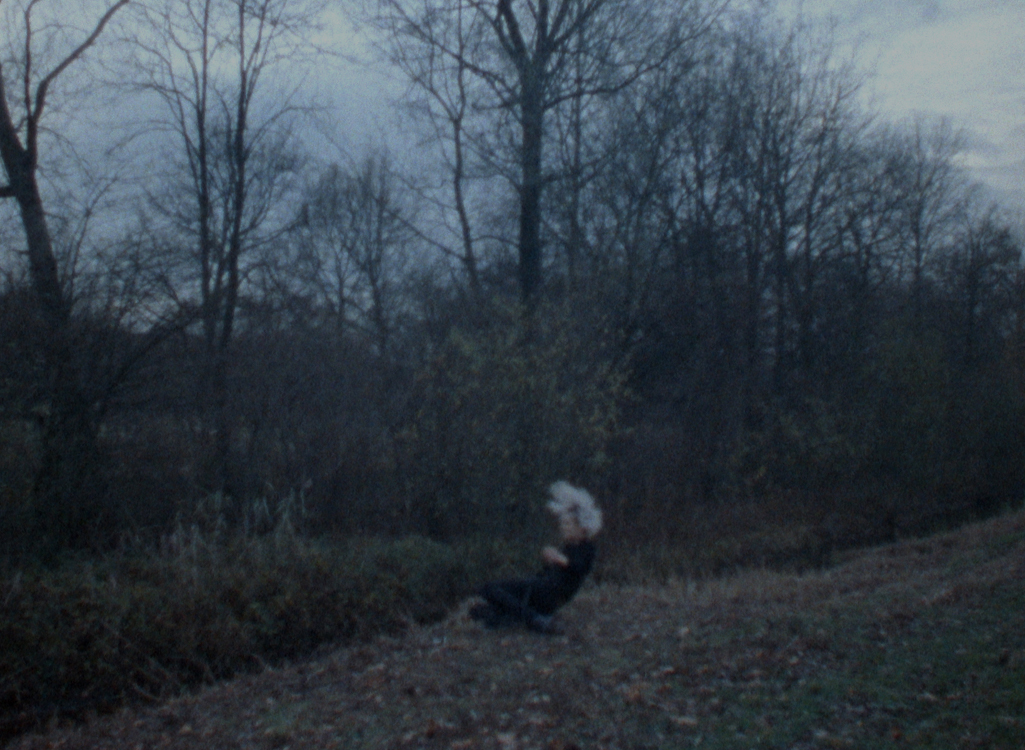
Video still
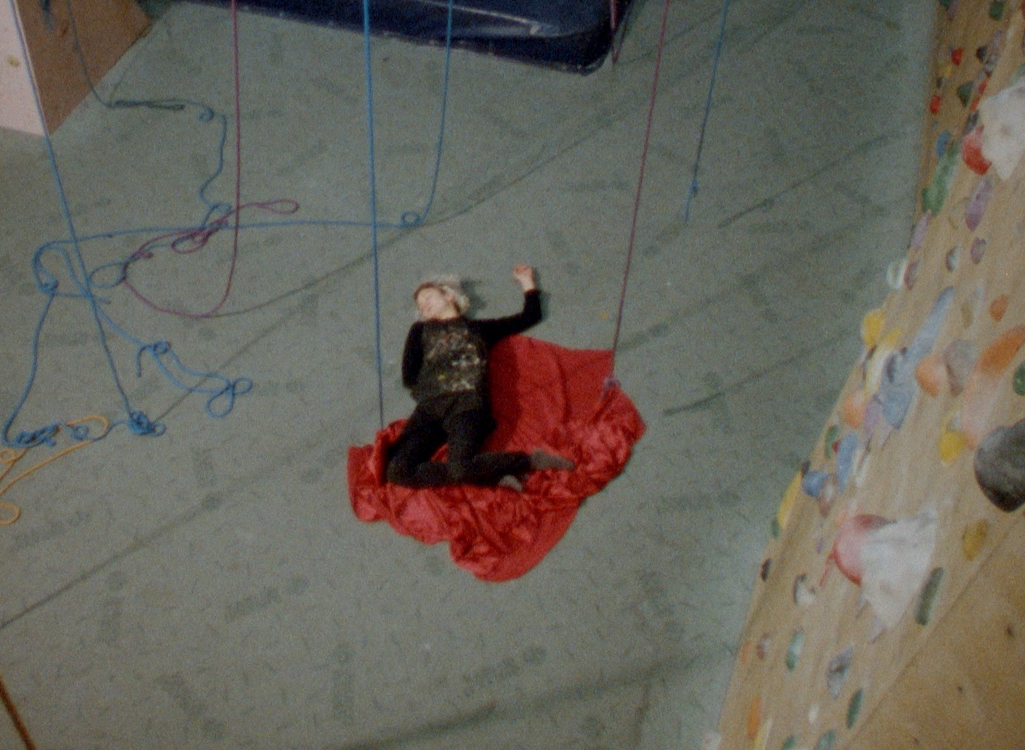
Video still
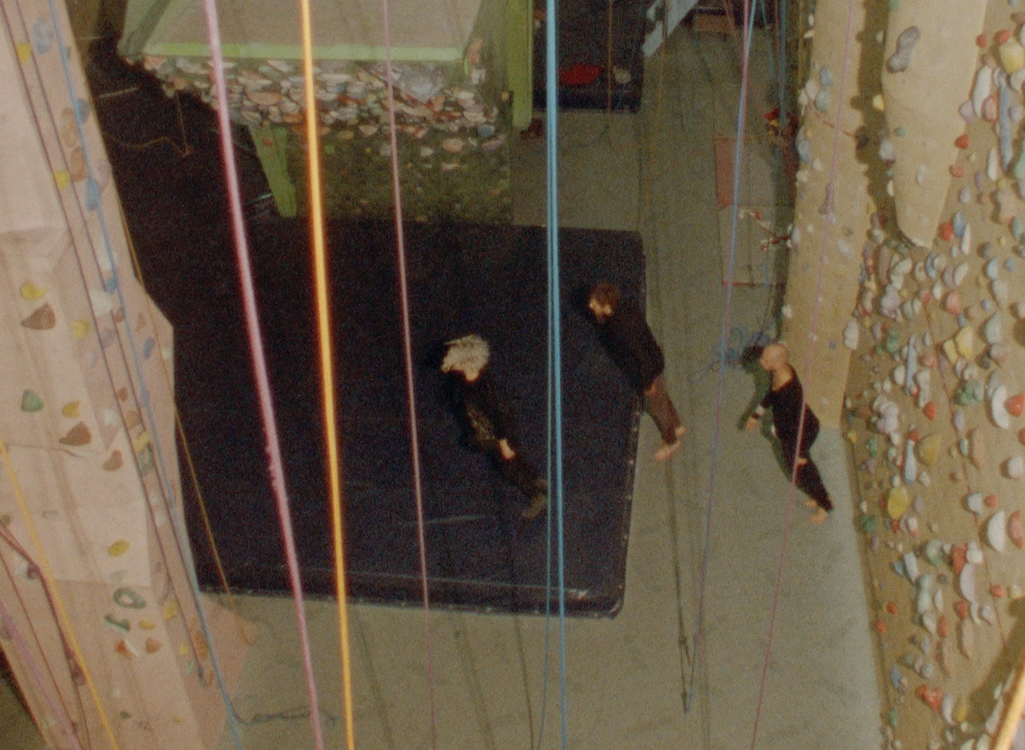
Video still
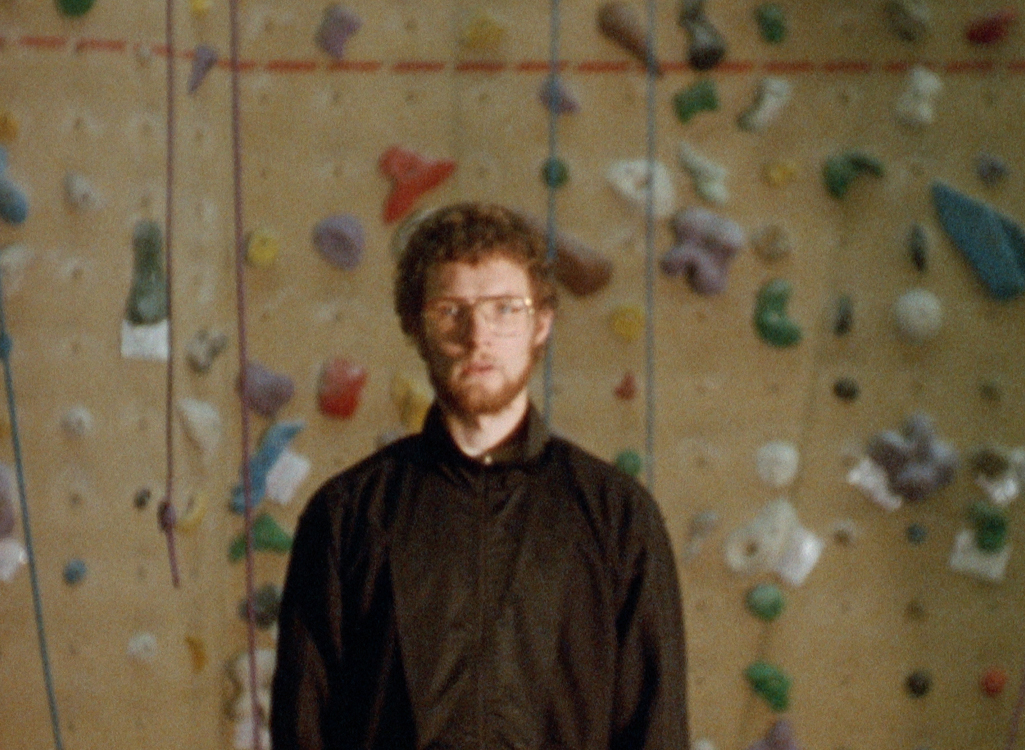
Video still
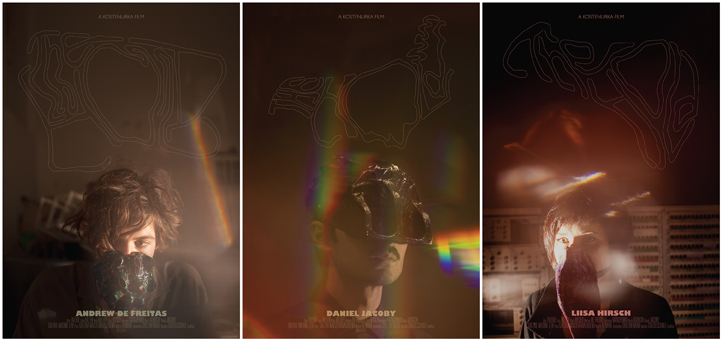
Series of three posters of the piece
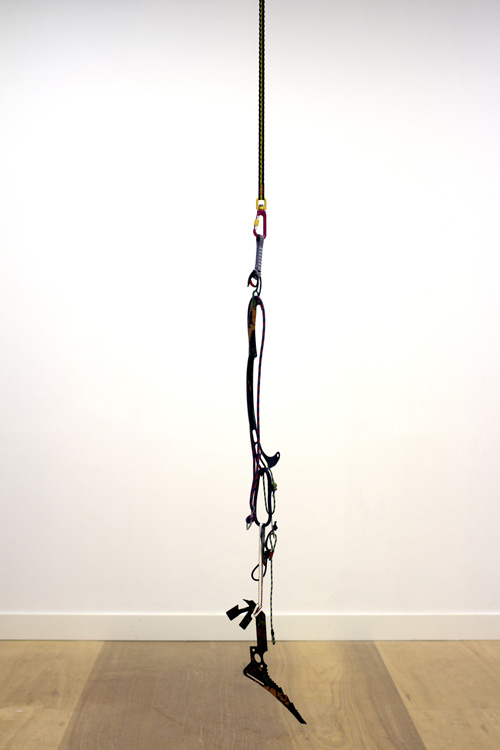
Production details of the piece
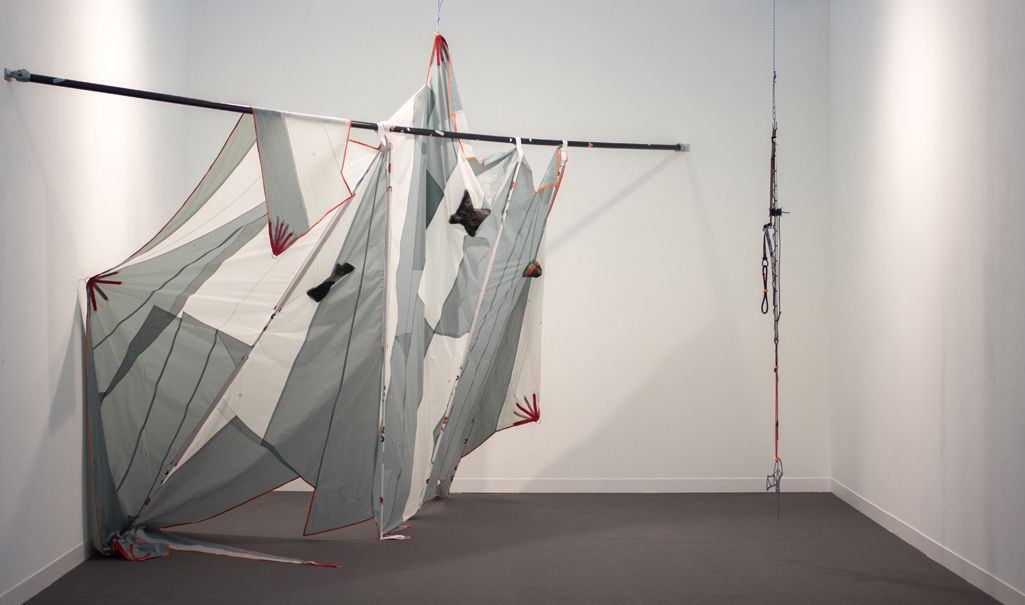
Production details of the piece
"Some time ago in Amsterdam, I took a climbing course at the Klimhal, the indoor climbing gym that later became the stage for Ahold of Get the Things To. The sort of brutalist architecture of this climbing gym was certainly a motivation when it came to challenging gravity while hanging from those inclined walls. Climbing is certainly not easy, but the feeling of being surrounded by this gigantic, sort of stone star observatory was rewarding enough.
During the course, I realized that climbing is not as much about strength as it is about strategy. A climbing route is a meticulously studied operation that you need to envision before you start and perform efficiently. I wanted to replicate this approach in my film. Therefore, the screenplay was written as a climbing route: a precisely synchronized performance for three characters that would go from one climbing hold to the next as they narrate the story.
There's a processual aspect in this work that I enjoyed very much. Many decisive choices came from working collectively, which is something I’ve been trying to do more and more lately. Working with my friend Andrew de Freitas for the camera and with the young Estonian composer Liisa Hirsch highly enriched the project. Both shooting on analog film (16 mm) and composing an original soundtrack were things I had never dealt with before, so I had no option but to blindly trust my team. It may sound scary, but it’s actually quite liberating. So much that, in a way, they ended up becoming characters of the film. To emphasize that, I designed a series of posters where I portrayed three members of the team — myself included — as protagonists of a fictional film that is mentioned in my film, and is titled The Hold.
Ahold of Get the Things To has a level of excessive complexity that I love and hate at the same time. It’s become sort of a puzzle, waiting to be solved — even by myself. There is a number of insignificant details and gestures that one just can’t register in the first viewing. Many of them are just mentioned briefly, but not really developed. Through the works that followed the film — that is, through sculptures, images, found objects, installations, fictional film posters —, I’ve tried to further explore all these open ends that the film barely introduces. Not so much to try to clarify things with these new instances, as to simply familiarize with a sort of own vocabulary. They all add up to a web of connections, but they not necessarily help to make sense of it."
Daniel Jacoby in a statement to PLATFORM:VB (July 2015)
Ahold of Get the Things To, 2014 | Video installation
Daniel Jacoby
Liisa Hirsch
Young Estonian composer who collaborated with the project
Alphaville (1965) | Jean-Luc Godard – Original Trailer
Artist's reference
Last Year in Marienbad (1961) | Alain Resnais (Trailer)
Artist's reference
“There's a very clear influence from the Nouvelle Vague cinema of the 50s/60s. Films like Alphaville (1965, Jean-Luc Godard), for its staging of a science fiction film in contemporary real locations, or Last Year at Marienbad (1961, Alain Resnais), for the way it narrates the story through silent, static scenes and voice-over narrations. However, many other stories, anecdotes and concerns converge in this work.”