Brésil 1 (Guarani) + L’Oiseau + Le crayon
2015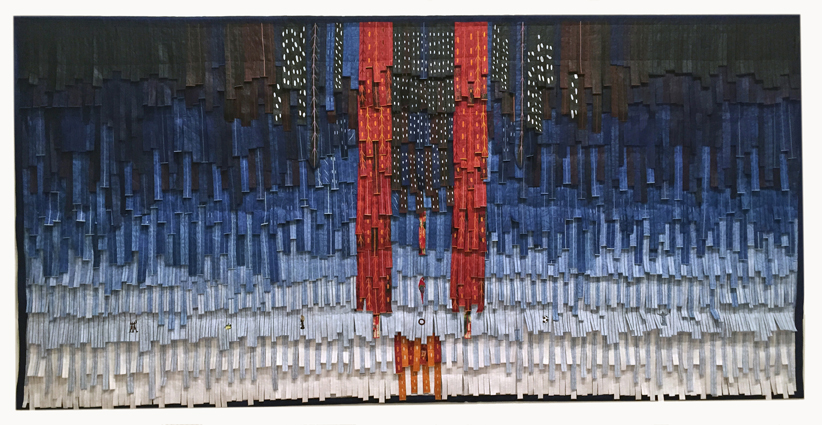
Detail of the piece Brésil 1 (Guarani)
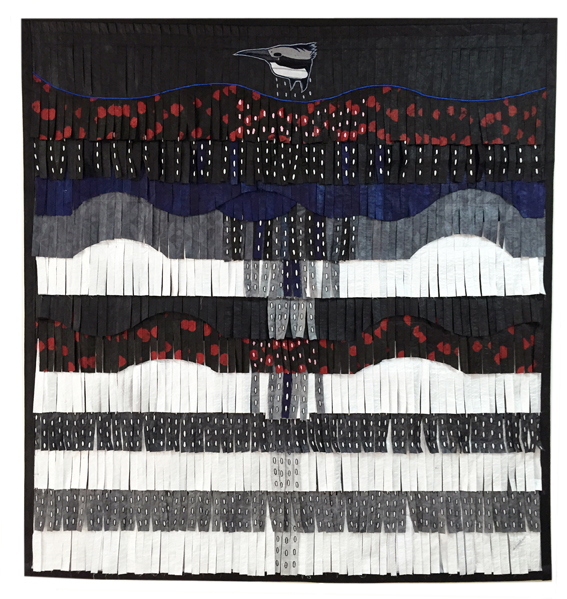
Detail of the piece L’oiseau
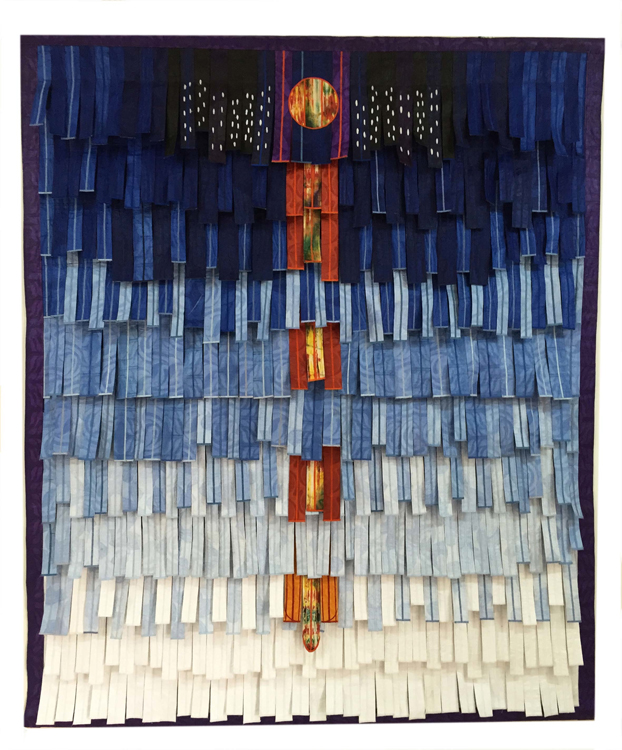
Detail of the piece Le crayon
Detail of the piece Brésil 1 (Guarani)
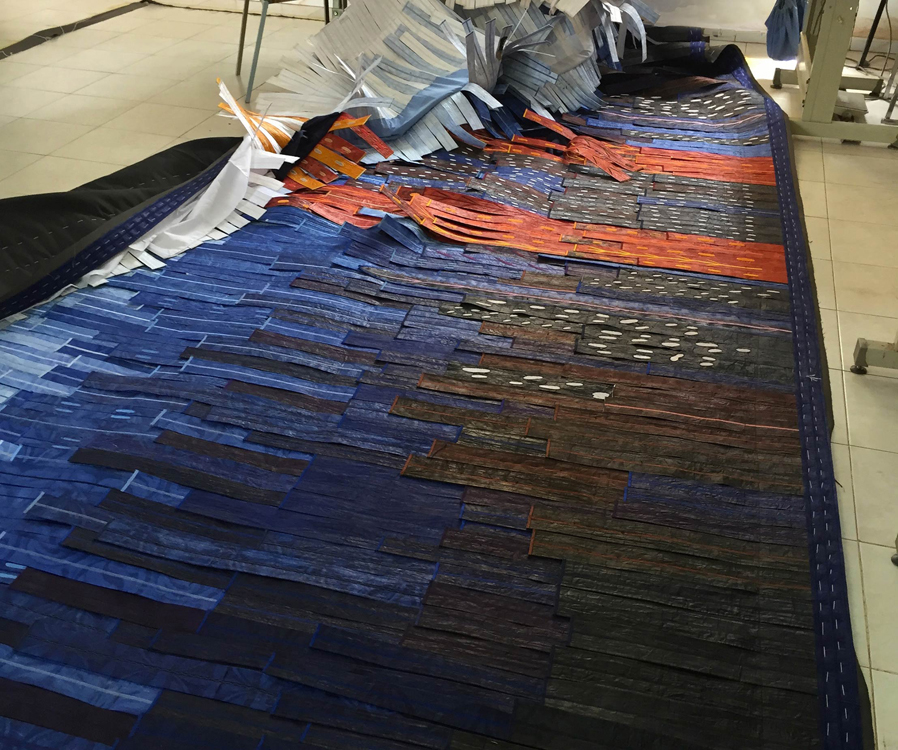
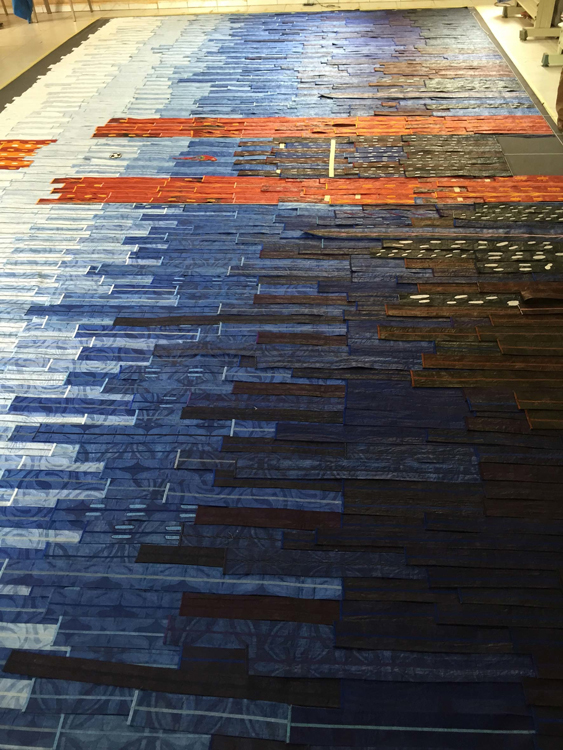
Pictures taken during the production of the piece Brésil 1 (Guarani)
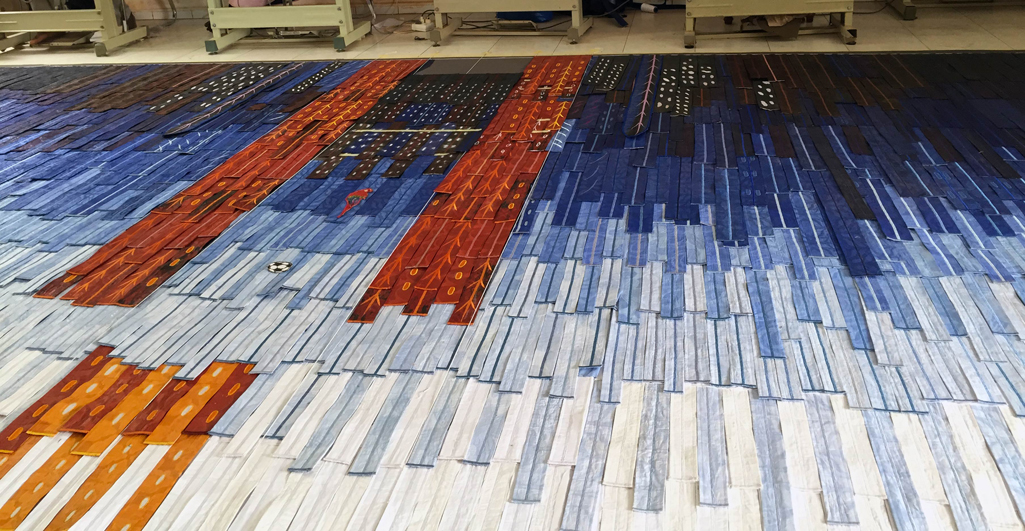
Pictures taken during the production of the piece Brésil 1 (Guarani)
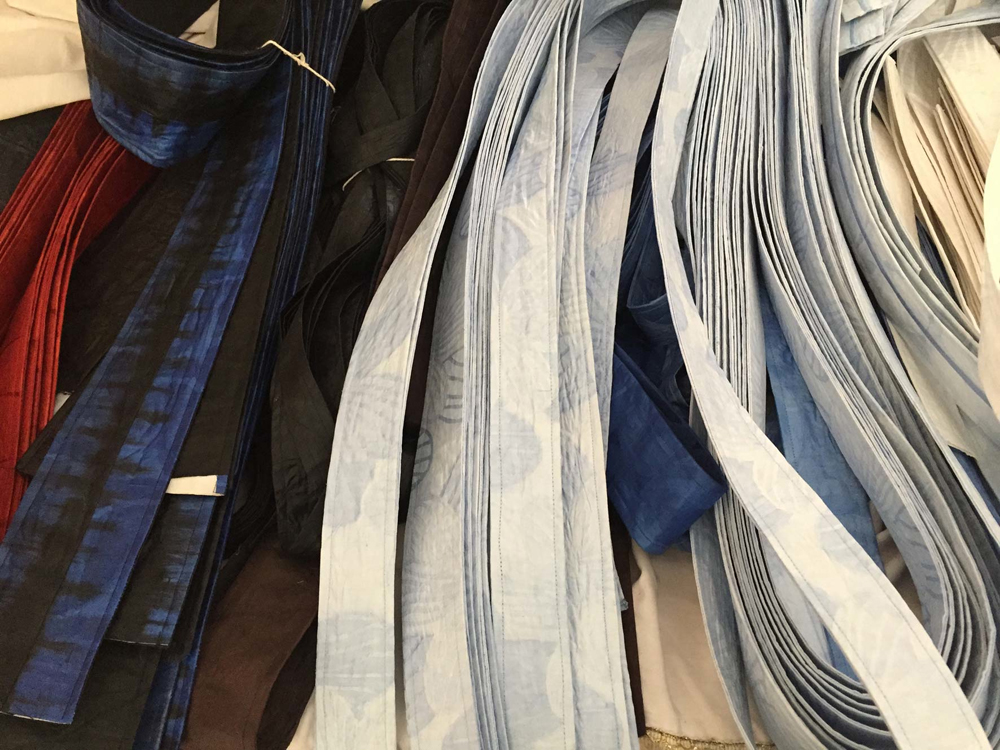
Pictures taken during the production of the piece Brésil 1 (Guarani)
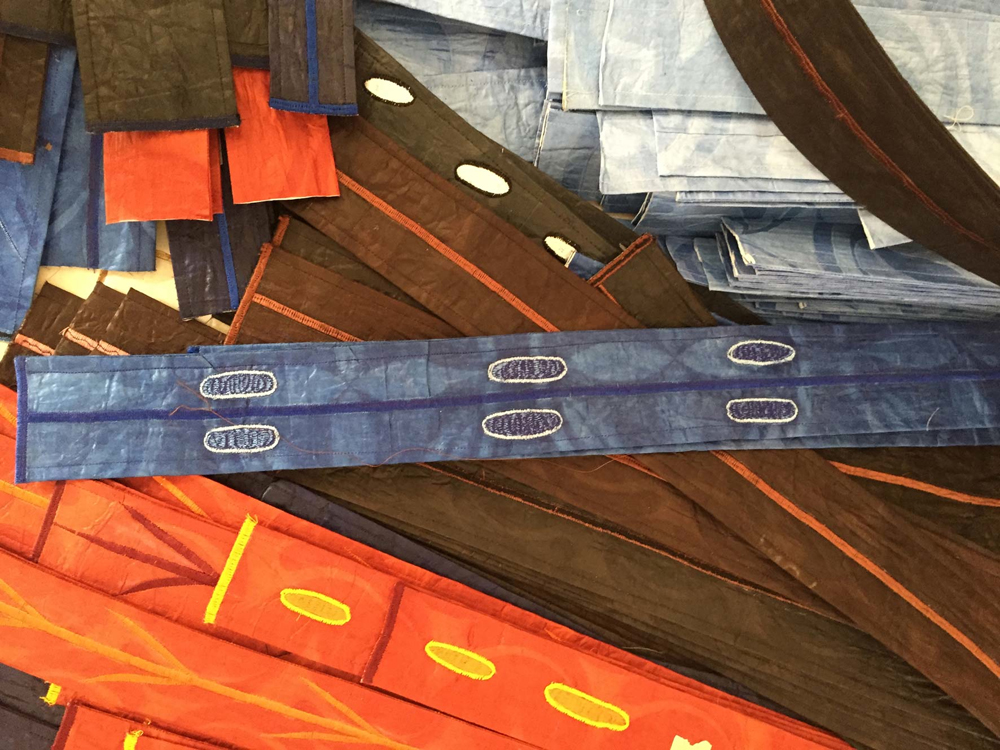
Pictures taken during the production of the piece Brésil 1 (Guarani)
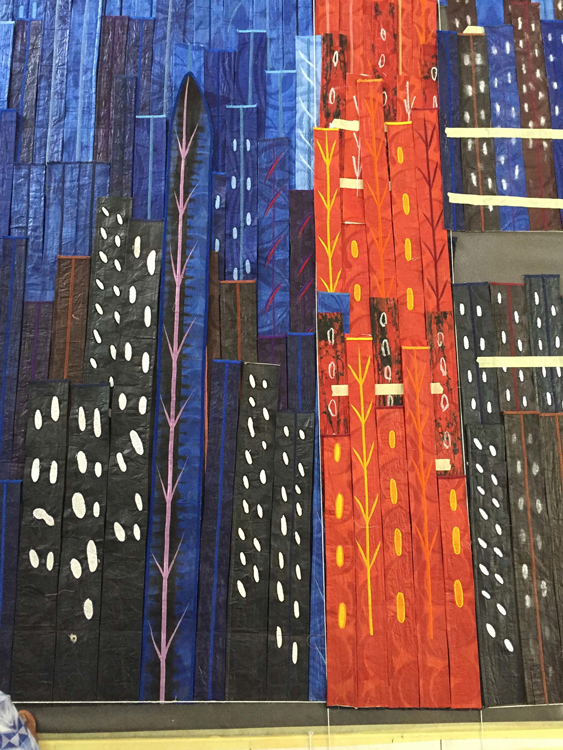
Pictures taken during the production of the piece Brésil 1 (Guarani)
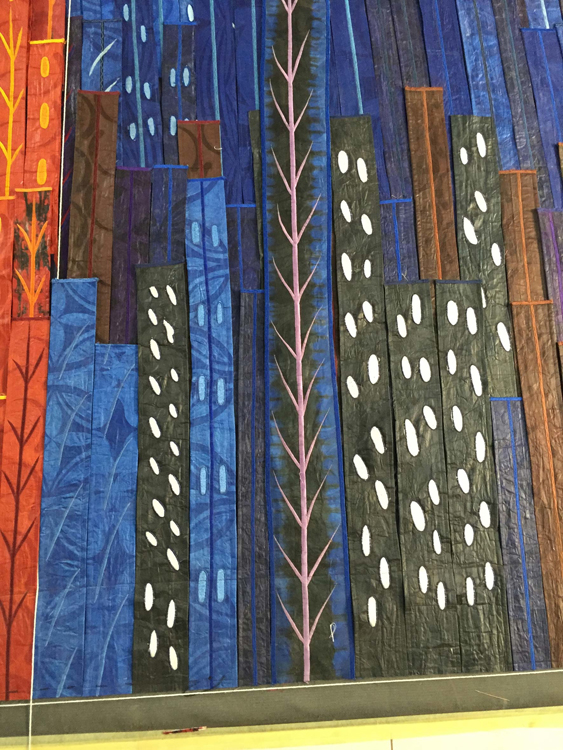
Pictures taken during the production of the piece Brésil 1 (Guarani)
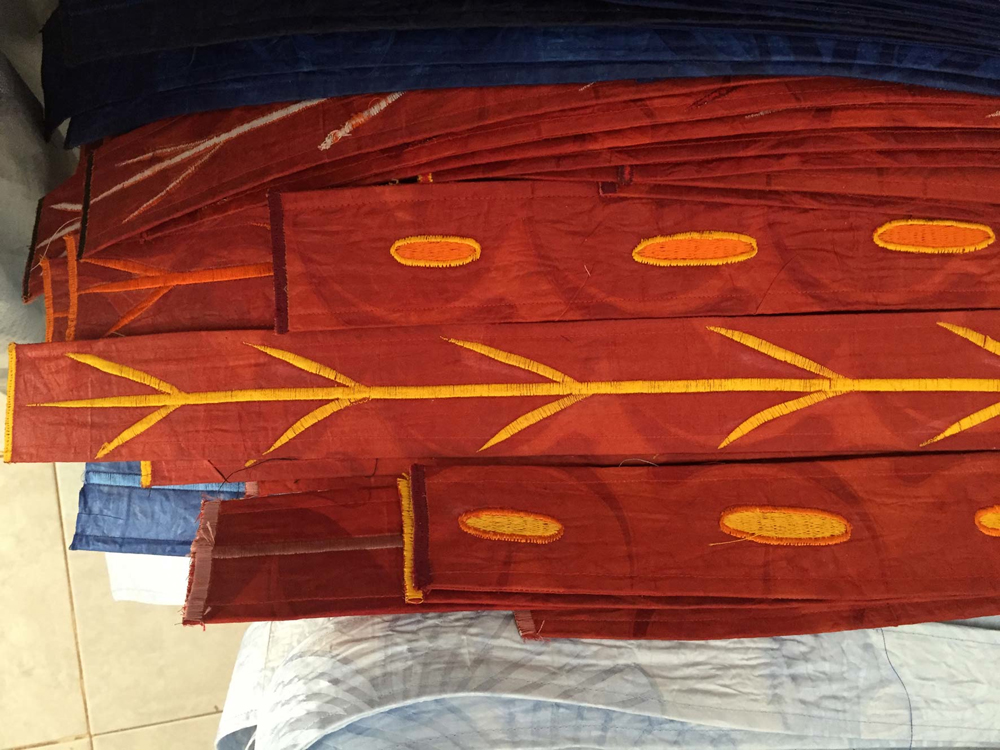
Pictures taken during the production of the piece Brésil 1 (Guarani)
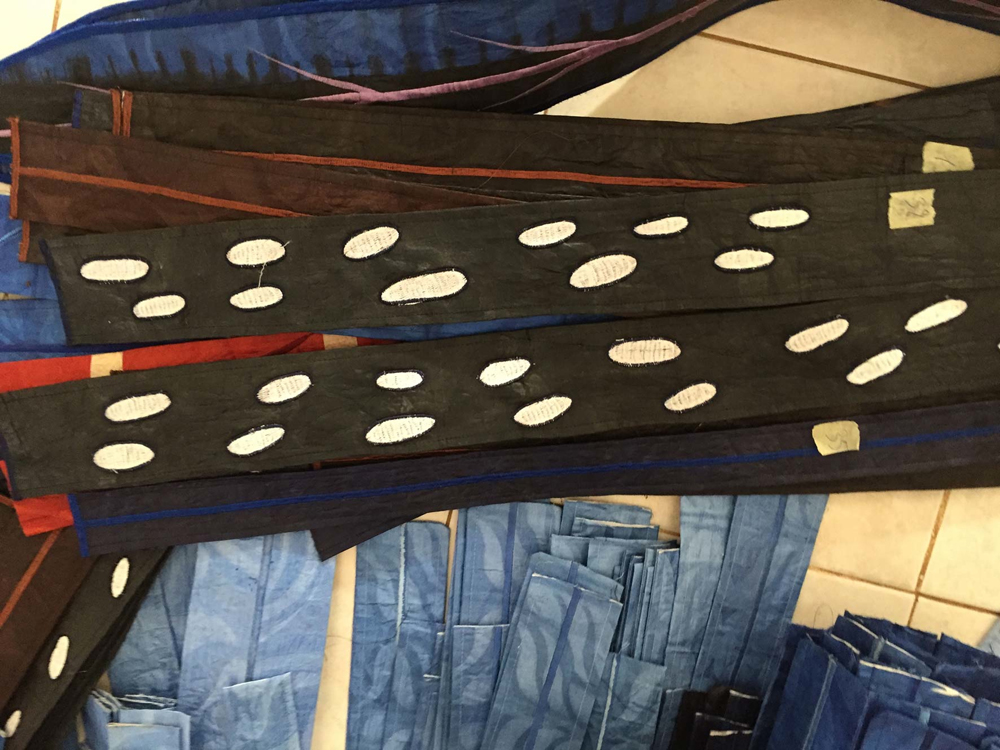
Pictures taken during the production of the piece Brésil 1 (Guarani)
Videobrasil: You started out as a painter, and only later did you move into working with textiles, which is something very traditional in Mali. When exactly did that shift come about and what did it mean to you to incorporate such a traditional support?
Abdoulaye Konaté: I got my artistic training at the Fine Arts School in Bamako, then went to work at the National Museum before moving to Cuba to round out my studies. In Cuba, I studied painting and the visual arts. I learned how to paint in oils and watercolors, and also did a little engraving, especially serigraphy and lithography. I kind of stumbled into textiles in the 1990s. I wanted to work large‑scale, and on many occasions while using acrylic paint I missed certain colors that you just couldn’t buy in Mali. I use fabric as a substitute for paint because I find all the colors I need in textiles. I started using them in installations because I wanted people to touch the material, get inside the works. So I never really devised a concept of what textile work was. You can find textiles everywhere in Mali. All along the Niger River Valley, which runs through Nigeria, Guinea, Mali, there’s a strong textile tradition. And Mali is an important cotton producer, one of the biggest in Western Africa. As I worked, I started to realize that this is something that pervades the entire development of art on the African continent: artists have always worked with the materials they had at hand. Just like in African sculpture, for example. So, I use textiles and fabrics as paint, trying to push the limits and bounds that are prescribed for textile work.
VB: There’s an aesthetic meaning to that choice, but a political one too. Could you elaborate on how these two sides balance out in your work?
AK: I mean this pursuit that has an aesthetic nature and something that you could almost call a social agenda. Themes are always pretty much subjects in which the artist has a personal interest. Artists develop their art around their interests on given topics. I’ve always tried to work with social issues, but the aesthetics—working with color and composition— has also always really interested me. The social phenomena that attract me most are the tragedies that beset society, and which I present as interrogations, inquiries, lines of questioning. Even if I don’t have any answers, at least I end up drawing public attention to those issues. This relationship between social messages and the aesthetic aspect of the work is often difficult. You’re afraid you’ll get stuck on literal, conceptual terms and neglect the artistic side. It’s a balance that’s hard to strike. I try to draw inspiration from African objects, the work of old, generally African cultures, but not only that. I also try to be as simple as possible in executing the work, without overburdening it. I attempt to stick to the essence of that which I want to say while producing a genuine artwork on the support.
VB: Your art deals with the symbology of a very particular culture. Do you think African artists today are seen as African artists or as artists of the wider world? Is there a division, an added value in this?
AK: There’s long been this tendency to pigeonhole the work of artists from Africa. And when we deviate a little from the beaten track, they say, “Ah, that’s not African,” as if we weren’t allowed to do anything else. This informed the work of many artists deeply. But these classifications—African artist, European artist—don’t bother me. They’re not a problem for me. The problem is that the message I try to get across is a universal one. I don’t draw a line about who’s going to come see my work. Of course, for curators and museums, it’s important to recognize that an artist comes from this or that region, but only as a means for understanding the work better. What I don’t agree with is using the classification “African artist” to relegate the work. I don’t mind people saying which continent I come from, so long as it’s not used pejoratively, to diminish my art.
VB: Videobrasil works with the concept of the geopolitical South, consisting of regions that do not belong to the European‑US circuit and its particular contribution to the contemporary world. What’s your feeling on that?
AK: On a global level, I’d say there’s a fight for intellectual space, and that’s terrible, because there are so many financial interests at play, not to mention cultural and political concepts. I think the festival allows certain artists to get back on track, to understand what’s happening in the world, and to see the best of what’s out there in their respective fields. It’s the ideal platform for valuing artistic work, and that’s something few countries have; few continents have.
VB: What would you say has changed on the art scene in Mali and Africa since you started working with art? Do you think it’s a more propitious environment for artistic creation today?
AK: The art world in Africa has changed a lot. Some biennials have come along, showcasing new artists. Dakar and Benin have created biennials, and there are some other significant events, too. Photography events have emerged in various African countries, as have others in cinema and music. There’s a real cultural effervescence going on. I’m not saying it’s at the level we’d want yet, but at least something’s working. This is fundamental if we’re to transform the way art is viewed inside and outside Africa, and to carve out more space for African artists on the international scene.
VB: What’s your view on recent artistic output in Mali and Africa? Do the traditional African crafts echo on in the work of younger artists like they do in yours?
AK: That’s been happening for a long time. When young European artists started using African masks, it had a strong influence on young African painters and artists. And when they left the masks aside, other cultural elements took their place. Young and also some established artists use African culture in their expression, and I think that’s great. Even artists who use video or photography look for things that are traditional. They research our intellectual tradition or go into the field to search for material.
VB: You’re the director of a superior school for artists, musicians, and designers. I’d like you to talk about the school’s concept.
AK: Our school is very new; it’s only ten years old, but some aspects have already started to germinate. There was a shortcoming in my artistic educational background, which followed a curriculum that was, first and foremost, academic and European/ American, in other words, it didn’t include African culture. So I proposed a project for a school that worked on three fronts. First was the academic, which teaches the artistic languages— music, dance, theater, the visual arts—by academic rules. The artist can break all those rules later on, but you’ve got to learn your ABCs first. The second front, which I consider paramount, involves teaching the student how to learn, master, and be able to communicate through the new technologies we see cropping up, and which are very important to Mali and to art. The third front is the role of tradition in artistic training. The students that graduate from our school can produce new work that draws inspiration from our culture, but they can do that through modern technologies and knowing all the elements of the artistic language. For me, all three components are essential if a young artist is to be ripe, properly equipped to understand the world and to eke out space in the international market.
VB: Did you study traditions and symbologies in Mali?
AK: Yes. And I spent fifteen years working at the National Museum. You might not realize it, but you soak culture up; you absorb elements of culture that you can use later, re‑signify, use as texture, or with modified content. Composition also allows us to stray from the traditional. No matter what continent you’re on, when you analyze the art that’s produced there, you see a balance, stability, something that underpins it. That’s no lucky accident. It’s something that comes from many years of visual experimentation. In the feather art of the Brazilian Indians I visited [at a Guarani village in Ubatuba, São Paulo], I sensed that the apparently simple composition was profoundly linked to the culture, and that the combination of colors was carefully thought out.
VB: What’s your interest in threatened peoples and cultures?
AK: When you analyze cultures, any culture, you see that societies tend to underestimate a section of their populations, which they dismiss as underdeveloped, as backward. These peoples are still holding out because they have something the others don’t and that they want to preserve. Instead of seeing something positive in these peoples, the world rejects them and often destroys them. The human whole is universal heritage. We have to do what we can to preserve what is positive in different cultures.
Interview with Solange O. Farkas, Teté Martinho, and Ana Paula Vargas in São Paulo, on occasion of the 19th Festival (November 2014)
Brésil 1 (Guarani), 2015 | Tapestry
L’oiseau, 2015 | Tapestry
Le crayon, 2015 | Tapestry
Abdoulaye Konaté
COTTON: Global Threads - Abdoulaye Konaté
Curator Jennifer Harris introduces the work of Abdoulaye Konaté featured in COTTON: Global Threads
Tentures - Teintures (Tapestries - Dyes) Textile works, by Mariane Buchet and Jean Loup Pivin. On occasion of Abdoulaye Konaté exhibition at Revue Noire gallery (May 2012). [eng]